

Field dressing demands a knife that cuts cleanly, holds an edge, and won’t slip in your hand when it matters most. A quality blade makes the difference between efficient processing and a frustrating, messy job in the field.
Finding the best field dressing knife means balancing blade design, steel performance, and handle control. This guide walks you through what to look for, which knives deliver real results, and how to keep your tool sharp and ready for the next hunt.
What Separates Effective Field Dressing Blades
Blade Length and Shape for Precision Work
The right blade length matters far more than most hunters realize. A 3 to 4-inch blade dominates field dressing work because it delivers the control you need when working around organs and joints without the weight penalty of longer knives. The Bradford Guardian 3, with its 3.5-inch drop-point blade, exemplifies this sweet spot-short enough to maneuver in tight spaces, long enough to handle quartering tasks.
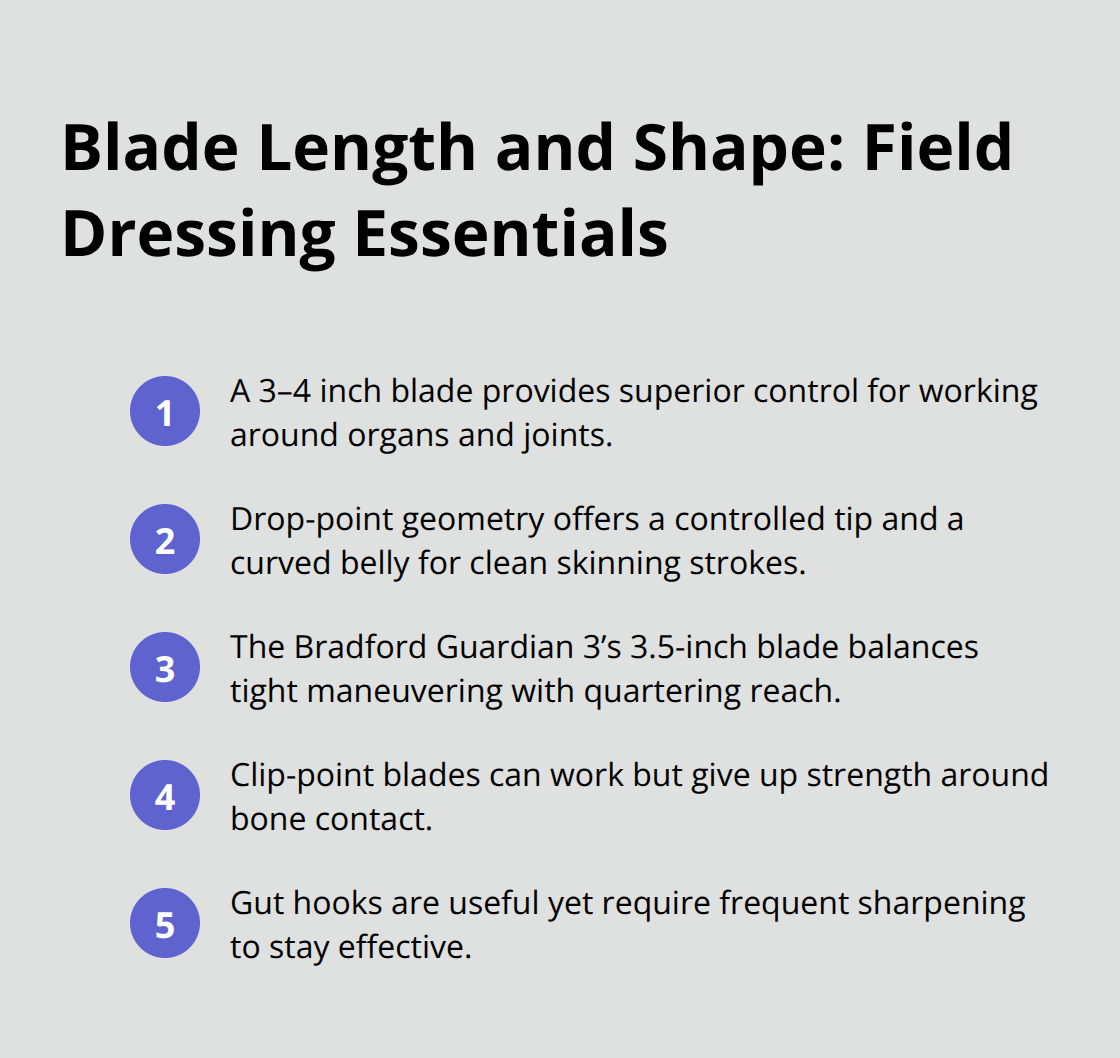
Drop-point geometry consistently outperforms other blade shapes for this work because the controlled tip penetrates hide without excessive pressure, while the curved belly handles the long, clean strokes required for skinning. Clip-point blades work in a pinch, but they sacrifice strength around bone contact, and gut hooks, though useful, demand frequent sharpening to remain effective in the field.
Steel Selection for Edge Retention
Steel choice determines whether your knife performs for one hunt or ten seasons. Bohler M390, found in premium options like the Bradford Guardian 3, delivers exceptional edge retention at 60 to 61 Rockwell hardness, meaning fewer touch-ups during extended processing. CPM-S90V, used in the Benchmale Altitude, offers similar wear resistance while keeping weight minimal for backcountry hunts.
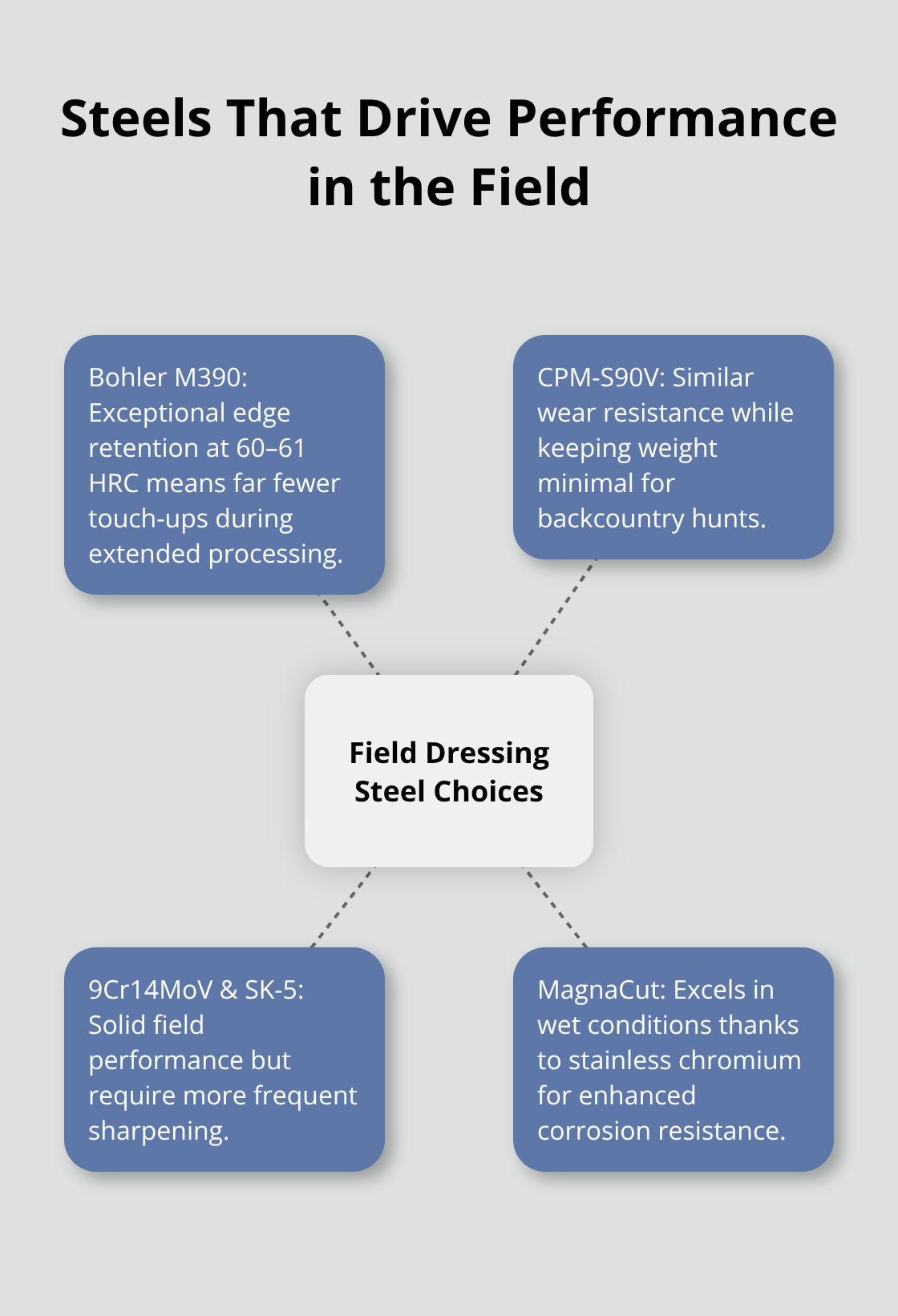
Mid-range steels like 9Cr14MoV and SK-5 still perform admirably in the field, but they require more frequent sharpening. MagnaCut steel stands out for wet environments because stainless steels contain added chromium to increase their corrosion resistance-this matters if you hunt coastal regions or during rainy seasons.
Handle Materials and Grip Control
The handle itself demands equal attention to blade steel. Micarta and G10 materials grip reliably when blood and moisture coat your hands, while rubberized TPR handles prevent slipping during critical cuts. Anti-skid spine grooves, as seen on the Browning Featherweight Classic, add another layer of control that becomes essential during long processing sessions when fatigue sets in. These design choices transform a sharp blade into a tool you can trust when conditions turn messy and your focus narrows to the task at hand.
Top Field Dressing Knives for Hunters
Fixed Blade Options for Reliability and Performance
The Bradford Guardian 3 earns its reputation as the best overall field dressing knife because it combines every element discussed above into one cohesive package. Its 3.5-inch drop-point blade in Bohler M390 steel stays sharp through multiple game animals without requiring field maintenance, while the full-tang construction delivers the rigidity needed for bone work. At 3.42 ounces, it never becomes a burden during long processing sessions, and the price point around $150 makes it accessible without sacrificing performance. For hunters who prioritize portability without sacrificing edge retention, the Benchmade Altitude stands apart with its exceptional 1.67-ounce weight and CPM-S90V blade that resists wear from repeated cuts through hide and sinew. The carbon fiber and G10 micro scales grip securely even when wet, and its Kydex sheath deploys rapidly when you need to work quickly. If you process game frequently or tackle larger animals like elk, the Browning Featherweight Classic excels with its 4 3/8-inch blade and 9Cr14MoV steel, offering the reach and edge retention needed for long skinning strokes while maintaining control through anti-skid spine grooves that prevent hand slippage during fatigue.
Folding Knife Alternatives for Portability
Folding knives introduce portability advantages that appeal to hunters carrying multiple tools or those who prefer compact EDC setups. The Benchmade Mini TaggedOut delivers a 3.04-inch CPM-S45VN blade in a 7.12-inch package that locks securely and maintains its edge through extended field work, though folding designs inherently sacrifice the leverage advantage of fixed blades during bone contact. The CRKT Clever Girl offers exceptional value under $100 with its 4.60-inch upswept SK-5 blade and G10 handle, backed by a lifetime warranty that reflects manufacturer confidence in durability. For concealed carry or minimalist setups, the Outdoor Edge LeDuck compresses functionality into just 3 ounces with its 2.5-inch blade and rotating clip, though this approach sacrifices reach and leverage for absolute portability.
Budget-Friendly Choices Without Compromising Quality
Budget-conscious hunters should examine the Gerber Moment Fixed-Blade Gut Hook, which delivers genuine field performance at approximately $30 through its 8.63-inch overall length, rubber handle, and included nylon sheath-this knife proves that entry-level pricing does not automatically mean compromised reliability. Real-world testing across multiple hunts reveals that fixed blades consistently outperform folding options when you process large game because the full-tang construction prevents blade collapse during heavy pressure around joints. This performance advantage makes fixed blades the superior choice for serious game processing, even though folding designs offer portability trade-offs that suit lighter tasks or backup carry situations.
How to Maintain and Care for Your Field Dressing Knife
Cleaning and Drying After Each Use
Field maintenance separates knives that perform for one season from tools that deliver results for a decade. After each use, rinse your blade under running water to remove blood, tissue, and bone fragments that accelerate corrosion and dull the edge faster than normal wear. Dry immediately with a cloth rather than air-drying, since moisture lingering on steel-especially carbon steel or mid-range stainless-initiates rust within hours in humid field conditions. For hunters processing multiple animals in a single day, carry a dedicated cloth in your pack and wipe your blade between each animal; this five-second habit prevents buildup that makes subsequent cuts harder and increases the risk of the knife slipping off hide or bone. Store your knife in its sheath immediately after drying to protect both the blade and your hands during transport back to camp.
Honing and Field Sharpening Strategy
Field sharpening demands a different approach than home maintenance. Honing steel and stropping maintain an already-sharp edge far more effectively than attempting full sharpening in the field, so invest in a diamond honing steel or ceramic rod that fits your pack without adding significant weight. A few passes along the spine every few hours of processing restores the edge to near-original sharpness without requiring a sharpening stone and time you do not have during active hunting.
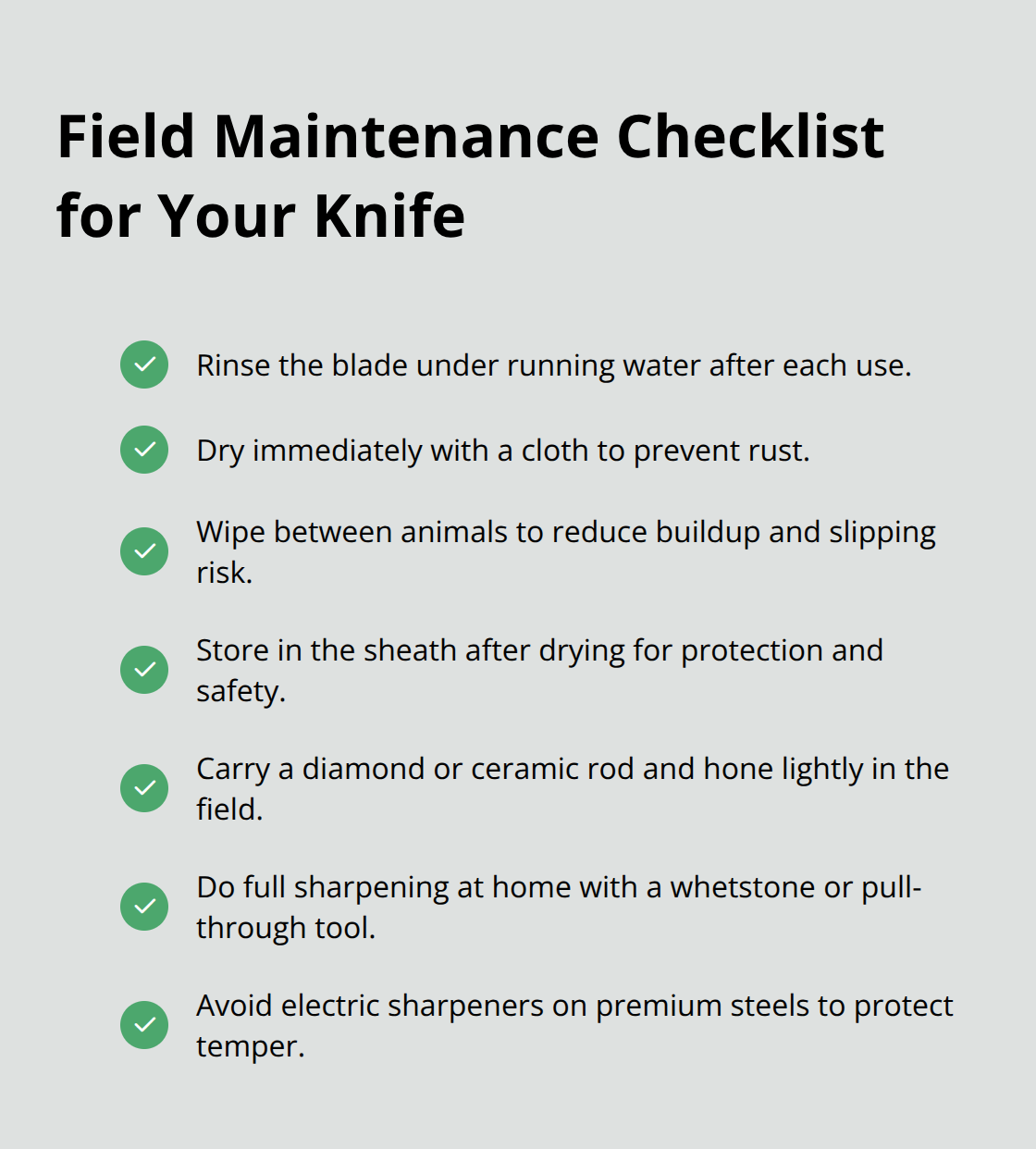
When you return home, use a whetstone or pull-through sharpener to restore the blade completely; the Bradford Guardian 3 with its Bohler M390 steel holds an edge long enough that most hunters sharpen fully only twice per season if they maintain it consistently in the field. For budget options like the Gerber Moment at roughly $30, replacement blades often cost less than professional sharpening, making disposable blade options practical for hunters who process game frequently. Never use electric sharpeners on premium steels like CPM-S90V or MagnaCut, as excessive heat damages the temper and reduces edge retention that makes these steels worth their cost.
Off-Season Storage and Corrosion Prevention
After the season ends, proper storage determines whether your knife emerges ready for next fall or corroded and dull. Apply a light coat of mineral oil or blade oil to the entire surface, then store the knife in its sheath in a cool, dry location away from humidity and temperature fluctuations. Leather sheaths allow the blade to breathe and prevent moisture accumulation, while Kydex options provide superior protection in damp environments; both require occasional inspection to ensure no moisture has trapped between blade and sheath. Store in a sealed container with a desiccant packet if you live in a humid climate or near coastal areas where salt air accelerates corrosion. Inspect your blade every few months even during off-season to catch any surface rust before it deepens into pitting that permanently damages the steel.
Final Thoughts
Selecting the best field dressing knife requires matching blade design, steel performance, and handle ergonomics to your specific hunting environment and game size. A 3 to 4-inch drop-point blade in quality steel like Bohler M390 or MagnaCut delivers the control and edge retention that separates efficient processing from frustrating field work. Your choice between fixed and folding designs depends on whether you prioritize the leverage and durability of a full-tang fixed blade or the portability of a folding option, though fixed blades consistently outperform when processing large game.
Budget constraints need not force compromise-the Gerber Moment proves that entry-level pricing delivers genuine field performance, while premium options like the Bradford Guardian 3 justify their cost through extended edge life and reduced maintenance demands across multiple seasons. Consider your hunting style, the game you pursue, and the environments where you work, then match your selection accordingly. A backcountry hunter carrying minimal weight might choose the Benchmale Altitude for its exceptional lightness, while someone processing elk regularly benefits from the reach and strength of the Browning Featherweight Classic.
Quality equipment transforms game processing from a chore into a manageable task that protects meat quality and respects your harvest. Investing in a reliable blade, maintaining it consistently through field cleaning and proper storage, and matching the right knife to your needs ensures you have a tool ready when it matters most. Explore our full line of field dressing knives to find the best field dressing knife that fits your hunting style and prepares you for the next season.