


A sharp blade is only as good as its condition. Dirt, food residue, and moisture are silent enemies that dull edges and invite rust, turning a reliable tool into a liability.
Learning blade cleaning best practices isn’t complicated, but it does matter. The difference between a five-year-old knife that still performs and one that’s already compromised often comes down to simple, consistent care.
This guide walks you through proven methods to keep your edges pristine, avoid common mistakes, and build maintenance habits that protect your investment.
Why Blade Cleanliness Matters
Rust Forms Fast on Unattended Steel
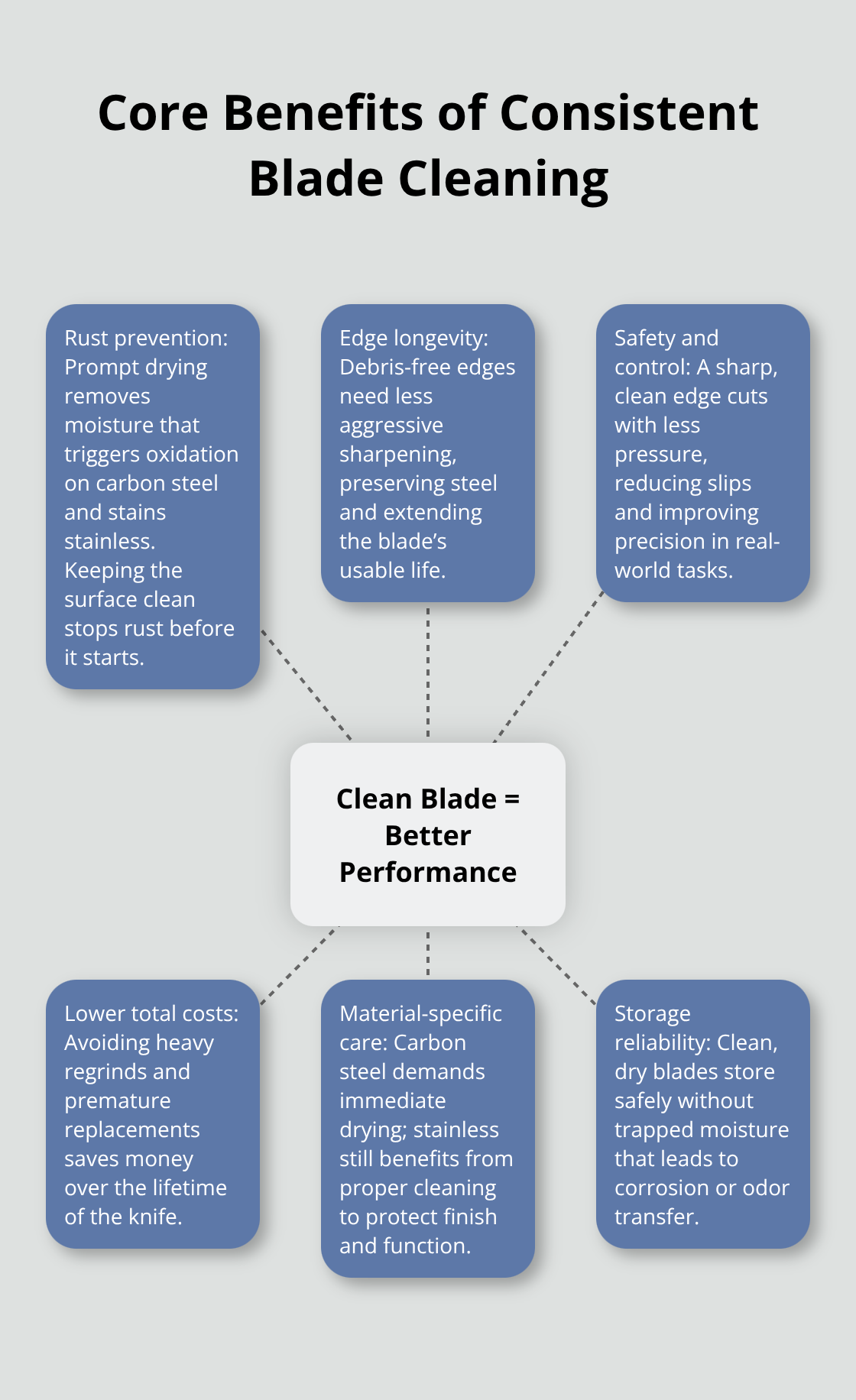
Rust doesn’t wait. The moment moisture sits on carbon steel, oxidation begins. This isn’t theoretical-it’s why field dressing a hunting knife demands immediate attention. Blood and tissue residue trap moisture against the blade, accelerating rust formation far faster than simple air exposure. A knife left uncleaned after field use can develop surface rust that, while removable, marks the beginning of edge degradation. Simply wiping the blade down with a towel after use keeps it from rusting. Until then, every uncleaned blade remains vulnerable to corrosion that compromises both appearance and performance.
Debris Dulls Edges and Multiplies Repair Costs
Dull edges aren’t just frustrating-they’re dangerous and expensive to fix. When you neglect cleaning, debris hardens on the blade and works into the microscopic edge structure, causing deformation, wrapping, crushing, and even chipping of the cutting edge. A sharp blade performs its cutting function with minimal pressure, reducing slip and injury risk. The moment dirt and dried residue accumulate, that edge loses efficiency, requiring more aggressive sharpening to restore. Each aggressive sharpening removes more steel than gentle maintenance would, shortening your blade’s total lifespan by years.
A knife that costs $150 or more demands the 30 seconds of drying time that prevents this damage. That same knife, properly maintained from day one, remains reliable and sharp for a decade or more. Neglect costs far more than discipline. The difference between a five-year-old blade that still holds an edge and one that’s already been resharpened three times comes down to consistent post-use cleaning and immediate drying.
Material Matters: Carbon Steel vs. Stainless
Carbon steel knives especially reward attention to moisture management-their superior edge-holding and ease of sharpening come with the non-negotiable requirement of prompt drying. Stainless steel offers more forgiveness, but proper drying still prevents surface discoloration and preserves the finish you paid for. A maintained blade is an asset; a neglected one is waste.
Understanding why cleanliness matters sets the foundation for action. The next section walks you through the specific methods that protect your edges in real-world conditions, from immediate field cleanup to deep cleaning techniques that restore blades after heavy use.
How to Clean Your Blade Properly
Immediate Field Cleanup: Speed Matters Most
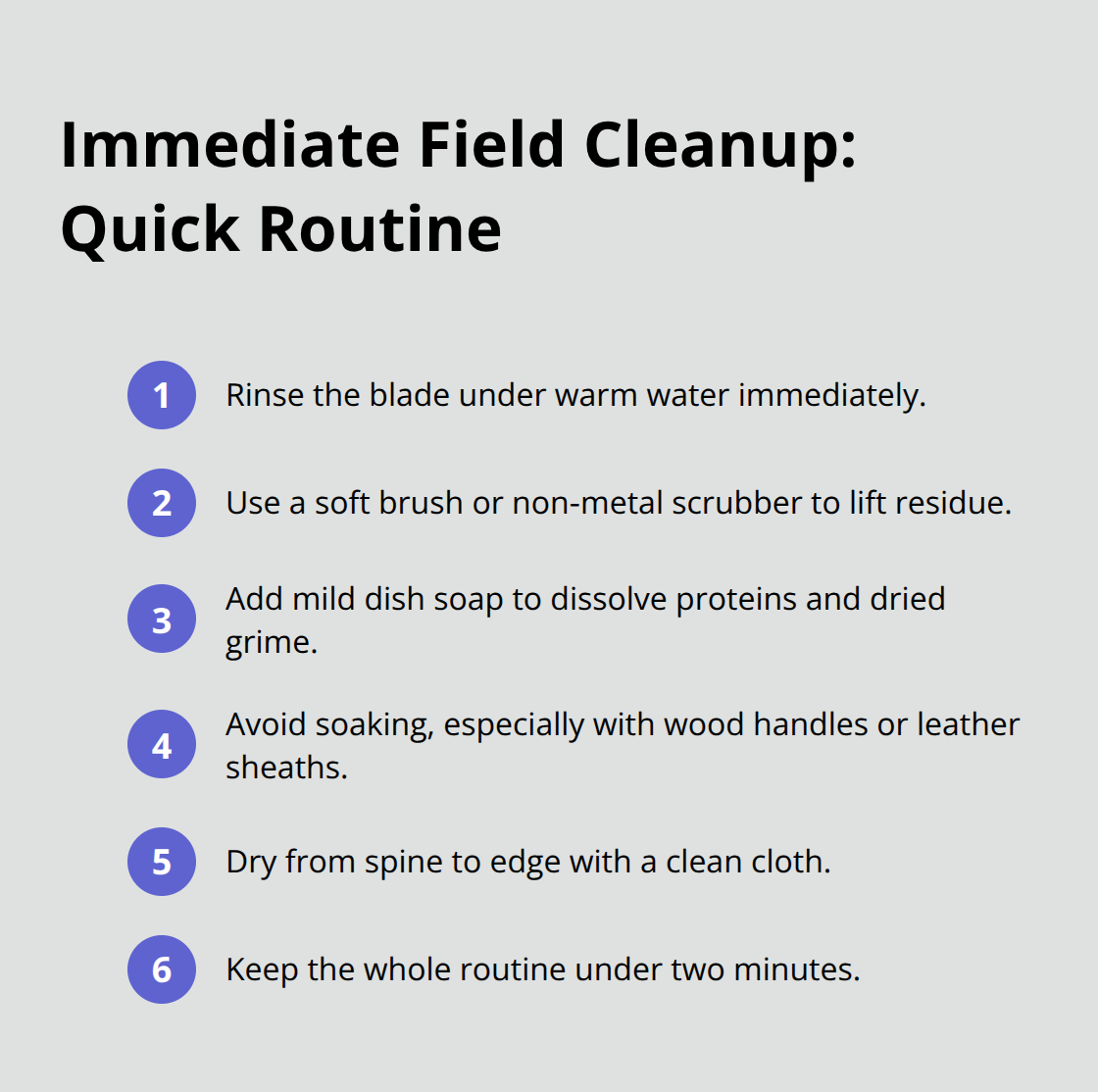
Field conditions demand speed, not perfection. When you finish using a blade on game, food prep, or outdoor tasks, the clock starts ticking on corrosion. The first few minutes after use matter most in preventing rust formation. Rinse the blade under warm water immediately, using a soft brush or non-metal scrubber to remove blood, tissue, and debris without scratching the edge. Mild dish soap helps dissolve proteins that water alone won’t lift, especially dried residue that has begun to harden. Avoid soaking the blade, particularly if it has a wood handle or leather sheath-prolonged water exposure swells wood and promotes moisture retention that invites rust. Once rinsed, dry the blade completely with a clean cloth, wiping from the spine toward the edge in controlled motions. This immediate post-use routine takes under two minutes and prevents the majority of rust problems before they start.
Carbon Steel vs. Stainless: Different Demands
Carbon steel knives demand this discipline every single time; stainless steel forgives occasional lapses, but drying still matters for finish preservation and edge longevity. The superior edge-holding and ease of sharpening that carbon steel offers come with the non-negotiable requirement of prompt drying. Stainless steel offers more forgiveness, yet proper drying still prevents surface discoloration and preserves the finish you paid for.
Deep Cleaning for Stubborn Buildup
Deep cleaning addresses what quick rinsing misses. When residue hardens or buildup accumulates in pivot areas and along the blade, warm soapy water and a soft brush still form your first line of defense-scrub gently but thoroughly, paying attention to any crevices where debris collects. For stubborn rust or discoloration on carbon steel, baking soda paste applied with a soft cloth removes surface oxidation without aggressive scrubbing that damages the patina. Bar Keepers Friend works faster for heavier rust but requires careful handling to avoid over-polishing the blade finish.
Storage and Moisture Prevention
After deep cleaning, dry immediately and completely, then store the blade in a dry, well-ventilated location away from humidity. A waxed canvas tool roll or dedicated knife storage case keeps moisture out far better than a kitchen drawer. For carbon steel blades, apply a light coat of food-safe mineral oil after cleaning to create a moisture barrier during storage. Check your blade’s color regularly-as patina develops from use, it shifts from silver-grey to darker tones, and this natural protective layer actually slows rust formation. Never store a dirty blade in a leather sheath; moisture wicks into the material and promotes both corrosion and odor transfer that ruins the sheath.
Building Sustainable Cleaning Habits
Consistent cleaning, immediate drying, and thoughtful storage transform blade maintenance into a quick habit that keeps edges reliable for years. The next section reveals the mistakes that undo all this careful work-and how to sidestep them entirely.
What Actually Damages Blades During Cleaning
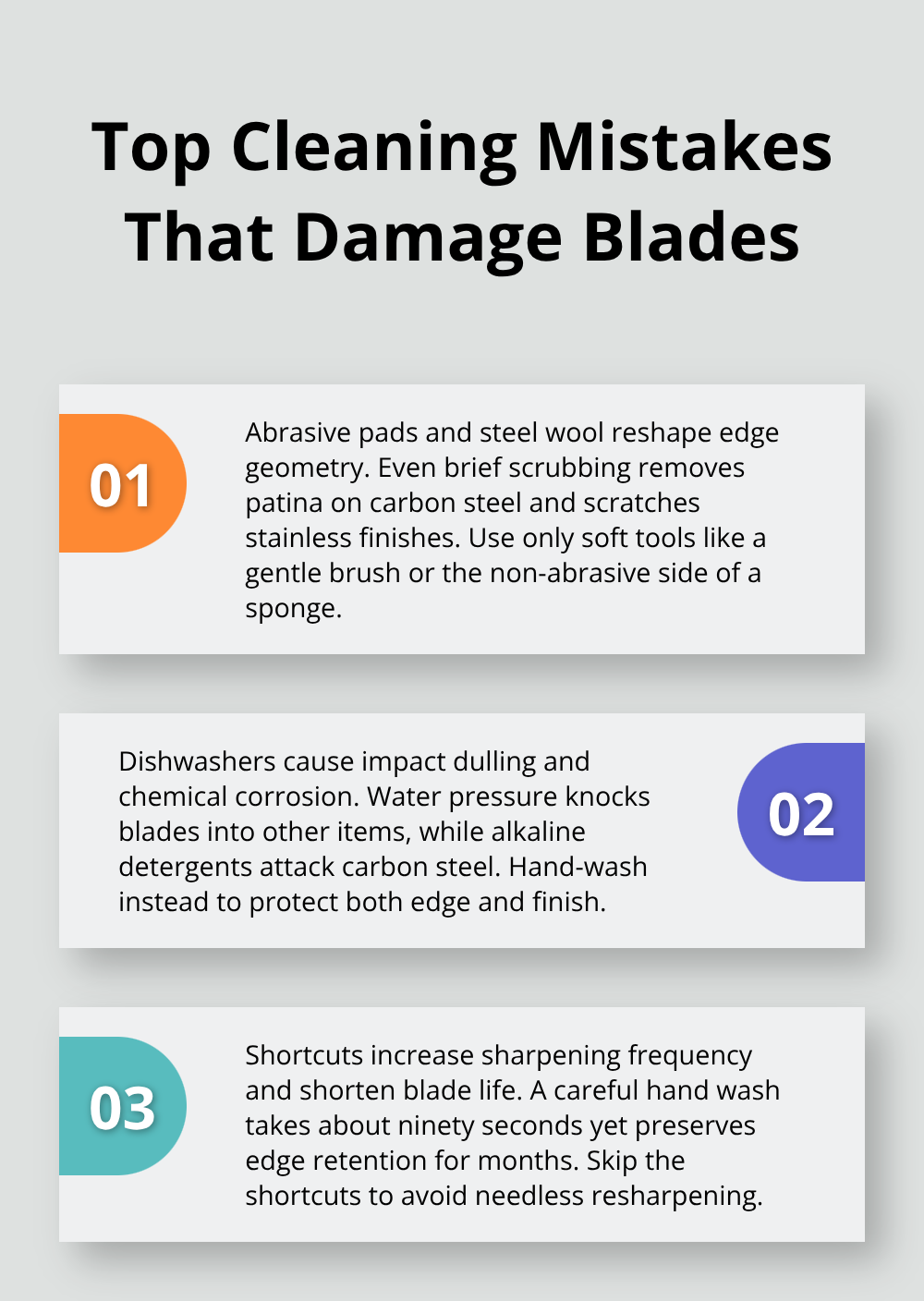
The moment you finish cleaning, the real mistakes begin. Most blade damage does not come from heavy use in the field-it comes from how you treat the knife afterward. Scouring pads, steel wool, and rough sponges damage edge geometry that takes weeks of careful sharpening to restore. The scrubby side of a standard kitchen sponge works fine for removing surface residue, but anything coarser strips away patina on carbon steel and scratches stainless finishes. Dishwashers destroy blades faster than any field condition ever could; the water pressure causes blades to hit other items and dull the edges, while the alkaline detergent accelerates corrosion on carbon steel. Hand washing takes ninety seconds. The difference between a blade that holds an edge for six months and one that needs resharpening every two weeks comes down entirely to avoiding these shortcuts.
Storage Mistakes That Accelerate Rust
Storing a damp blade in a closed sheath or knife roll creates conditions that accelerate rust formation exponentially compared to air exposure. A leather sheath that has not fully dried after cleaning becomes a rust factory; the material wicks moisture directly against the blade surface. Waxed canvas tool rolls prevent this problem far more effectively than traditional leather, but only if the blade itself is completely dry before storage. Carbon steel especially demands this discipline-any lingering moisture, even invisible moisture, begins oxidation within hours. The patina that forms over months of proper use actually slows rust significantly, but it cannot protect against moisture sealed against the blade by poor storage choices.
Pivot Points and Handle Neglect
Pivot points and handle areas accumulate debris that most people ignore until the knife fails. Dust and dried residue settle in folding knife pivots and lock mechanisms, creating friction that makes the blade sticky and difficult to deploy reliably. A soft brush pushed gently into the pivot area removes this buildup without forcing debris deeper into the mechanism. After cleaning, apply a thin coat of dedicated knife oil to the pivot-not cooking oil, not WD-40, but actual knife oil designed for food contact and corrosion prevention.
Wooden Handles and Leather Sheaths Require Care
Wooden handles demand special attention; prolonged soaking or even brief submersion swells the wood and creates gaps where moisture hides. Wipe wooden handles with a damp cloth only, then dry immediately with a separate cloth. Leather sheaths require the same treatment-a quick wipe with a barely damp cloth followed by air drying in a well-ventilated space (avoid direct sunlight, which can fade color). Neglecting these areas means a blade that functions perfectly in the field but corrodes or malfunctions during storage, turning a reliable tool into a frustration. Most blade failures come not from poor initial quality but from maintenance lapses in these overlooked zones.
Final Thoughts
Blade cleaning best practices rest on three habits that take minutes but determine whether your knife remains reliable for years or deteriorates into frustration. Clean immediately after use, dry completely before storage, and inspect regularly for early signs of rust or damage. The difference between a five-year-old blade that still performs and one already compromised comes down entirely to consistency, not complexity or special equipment.
Warm water, mild soap, a soft cloth, and prompt drying prevent the majority of corrosion and edge degradation before they start. Carbon steel demands this discipline every single time; stainless steel forgives occasional lapses, but proper maintenance still preserves both function and finish. Those first few minutes after use matter more than anything else you can do to protect your investment.
Treat blade care as part of using the knife, not as a separate chore. Keep a cloth near your work surface, dry your blade before storage, and store it in a dry location away from moisture. Explore dedicated resources on maintenance techniques and tools that match your blade type and use case to deepen your knowledge and keep your edges sharp when you need them most.