
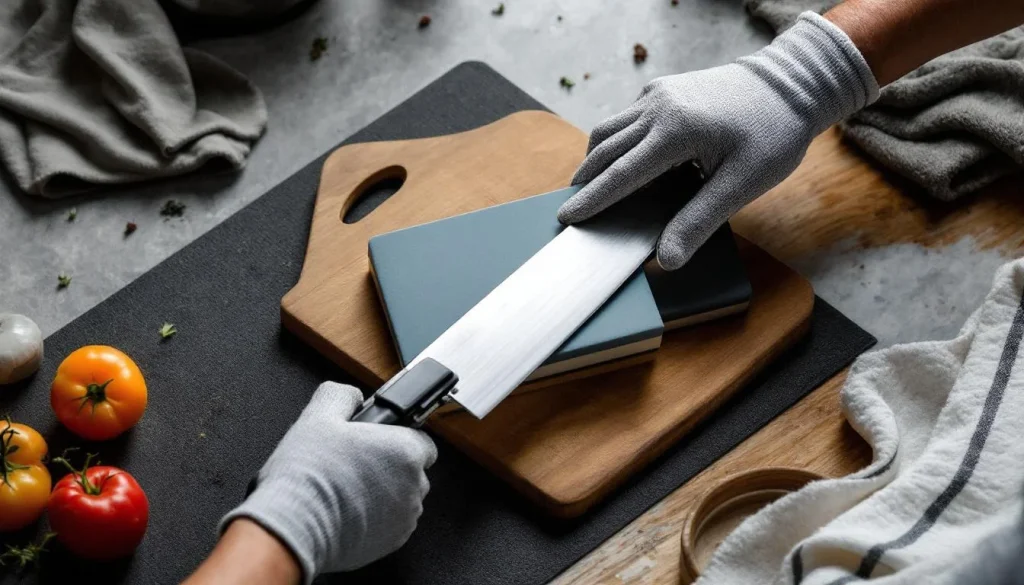

A dull knife is dangerous, frustrating, and wasteful. It slips off food, demands excessive force, and dulls faster than a sharp blade maintained properly. Learning how to sharpen knives transforms your cutting experience and protects your investment.
This guide walks you through proven methods, correct technique, and practical safety steps so you can sharpen with confidence.
Why Sharp Knives Matter
The Safety and Performance Edge
Sharp knives cut cleanly and demand minimal force, staying safer in your hands than a dull blade. Dull knives slip unpredictably off food, forcing you to compensate with dangerous pressure and awkward angles. Professional kitchens and field users maintain sharp edges precisely because they understand this reality. The difference shows immediately: a sharp edge slices through tomato skin without crushing or tearing the flesh, while a dull blade squashes the fruit or tears unevenly.
Lifespan and Long-Term Value
A properly sharpened blade lasts far longer than one left to dull naturally. Professional sharpening removes material along the blade length variably, while aggressive pull-through sharpeners strip significantly more. This means a blade maintained with whetstones or professional service can endure far more sharpenings before significant width loss, compared to pull-through methods. A 200-dollar chef knife maintained professionally costs approximately 0.02 dollars per day over 20 years, while the same knife destroyed by pull-through sharpening costs 0.11 dollars per day. The math favors precision maintenance every single time.
Honing vs. Sharpening: Know the Difference
You should hone your knife with a steel before every cooking session or field use-a quick 30-second task that realigns micro-bends without removing metal. Sharpening itself happens far less often, roughly every 3 to 6 months for home cooks and weekly or biweekly in professional kitchens. Confusing honing with sharpening wastes effort and material, so understanding the distinction protects your investment and maintains consistent cutting performance. The discipline of regular maintenance separates knife owners who preserve their tools from those who replace them constantly.
Now that you understand why sharp knives matter, the next step is learning which tools and methods deliver the best results for your needs and skill level.
Which Sharpening Method Works Best for Your Needs
Whetstones: The Professional Standard
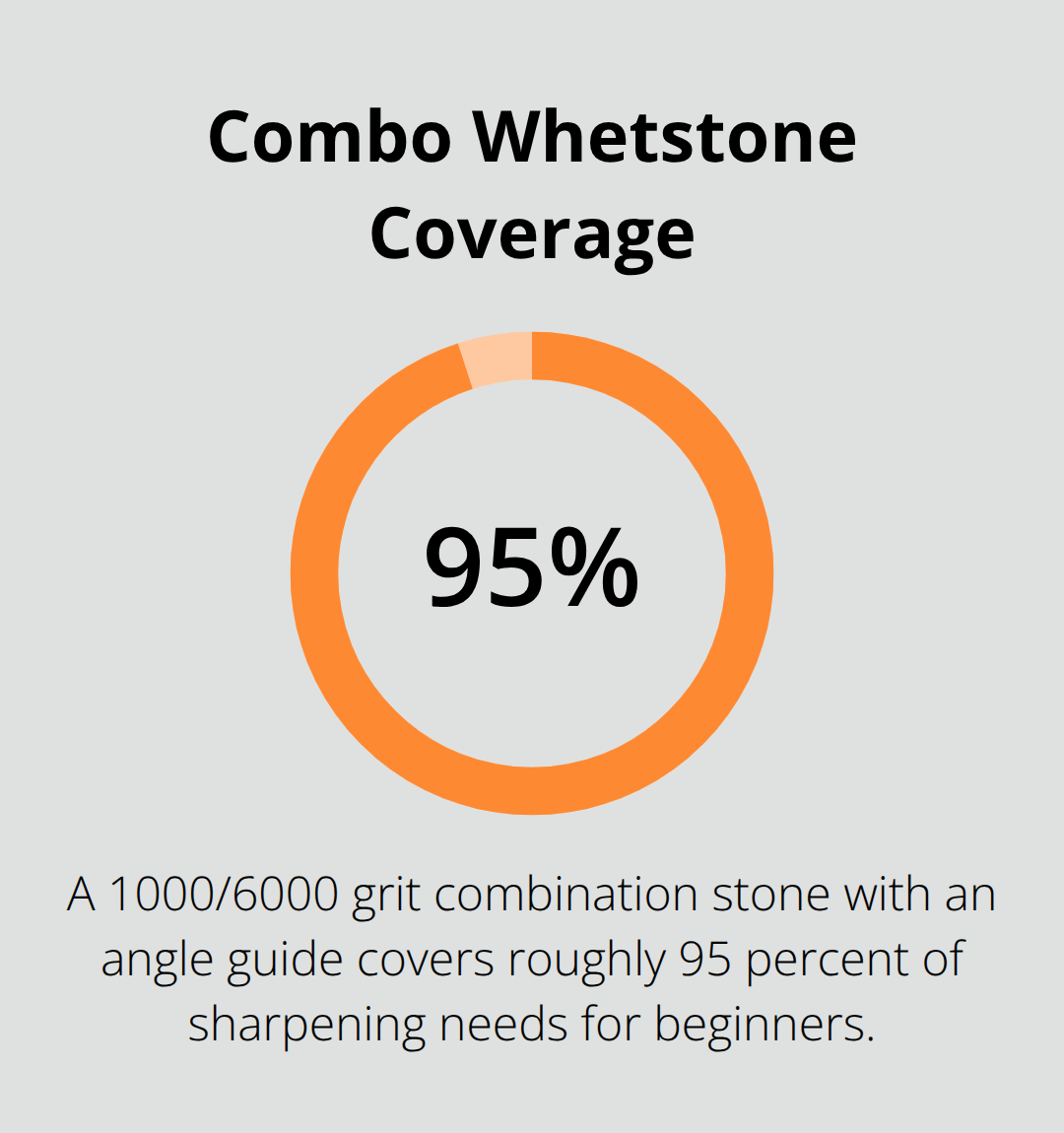
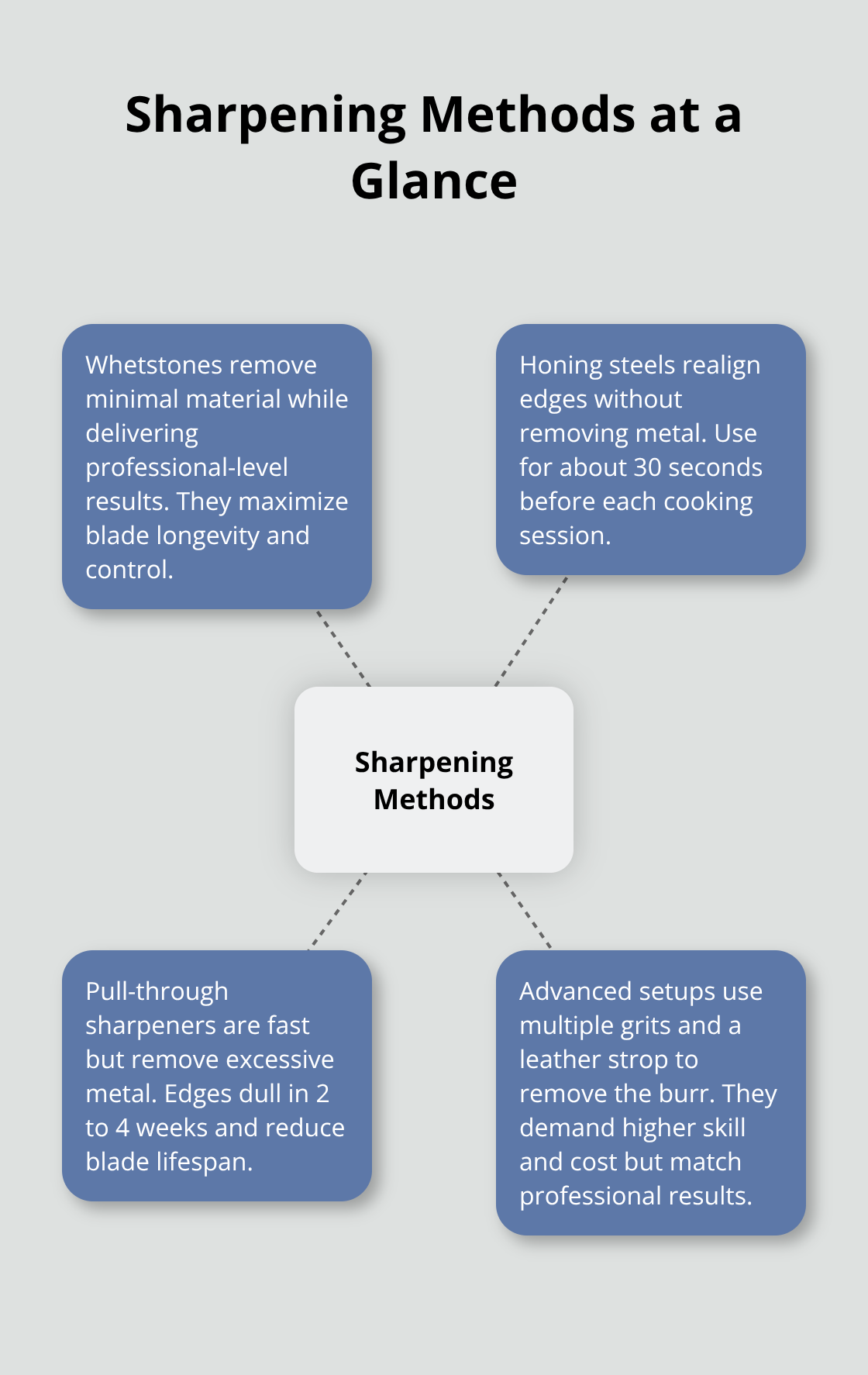
Whetstones remain the gold standard for home sharpeners because they remove minimal material while delivering professional-level results. A quality whetstone setup costs 40 to 70 dollars for beginners (a 1000/6000 grit combination stone with an angle guide covers roughly 95 percent of sharpening needs). The process demands patience: soak the stone for 15 minutes, establish a consistent 15 to 20-degree angle, and work both sides of the blade using a stroking motion that draws the edge toward you. Most home cooks sharpen every 3 to 6 months, so the initial investment pays dividends over years of use.
Honing Steels: Daily Edge Maintenance
Honing steels realign micro-bends without removing metal, making them essential for daily maintenance but useless for restoring a genuinely dull edge. Use a honing steel for 30 seconds before each cooking session to maintain your edge between full sharpenings. This simple habit preserves cutting performance far more effectively than waiting until your blade becomes dangerously dull.
Pull-Through Sharpeners: The Convenience Trap
Pull-through sharpeners and ceramic rods represent the convenience trap: they remove excessive metal, cutting your blade’s lifespan significantly. A knife sharpened with a pull-through lasts only 2 to 4 weeks before dulling again, versus 3 to 6 months with whetstones. A 200-dollar chef knife can endure roughly 225 professional sharpenings before significant width loss but only 30 with aggressive pull-through methods. If you demand speed over blade preservation, pull-throughs deliver quick results-but your knives will pay the price.
Advanced Setups for Serious Enthusiasts
Serious enthusiasts invest 150 to 250 dollars in separate stones (400, 1000, 3000, 8000 grit) plus a leather strop for burr removal, achieving results indistinguishable from professional services. The learning curve spans 10 to 20 knives before muscle memory develops, so practice on inexpensive blades first. Avoid common beginner mistakes: inconsistent angles, excessive pressure, skipping burr removal, and starting with too fine a grit on dull edges.
Now that you understand which tools suit your situation, mastering the actual technique separates casual knife owners from those who maintain truly sharp blades.
Getting Your Angle Right
Finding Your Target Angle
The blade angle determines whether you sharpen effectively or waste effort grinding away metal. Most Western chef knives demand a 20 – 22° per side angle, while Japanese knives typically sit at 15 degrees due to their harder steel and tapered geometry. Finding this angle manually feels impossible at first, so use an angle guide or marker trick: place a permanent marker across the blade’s edge, then position the spine and edge against your whetstone at your target angle. Stroke once and check if the marker marks the entire edge. If only the spine or edge shows marks, adjust until the full blade contacts the stone. This visual feedback eliminates guesswork and builds muscle memory faster than any description.
Pressure and Hand Position
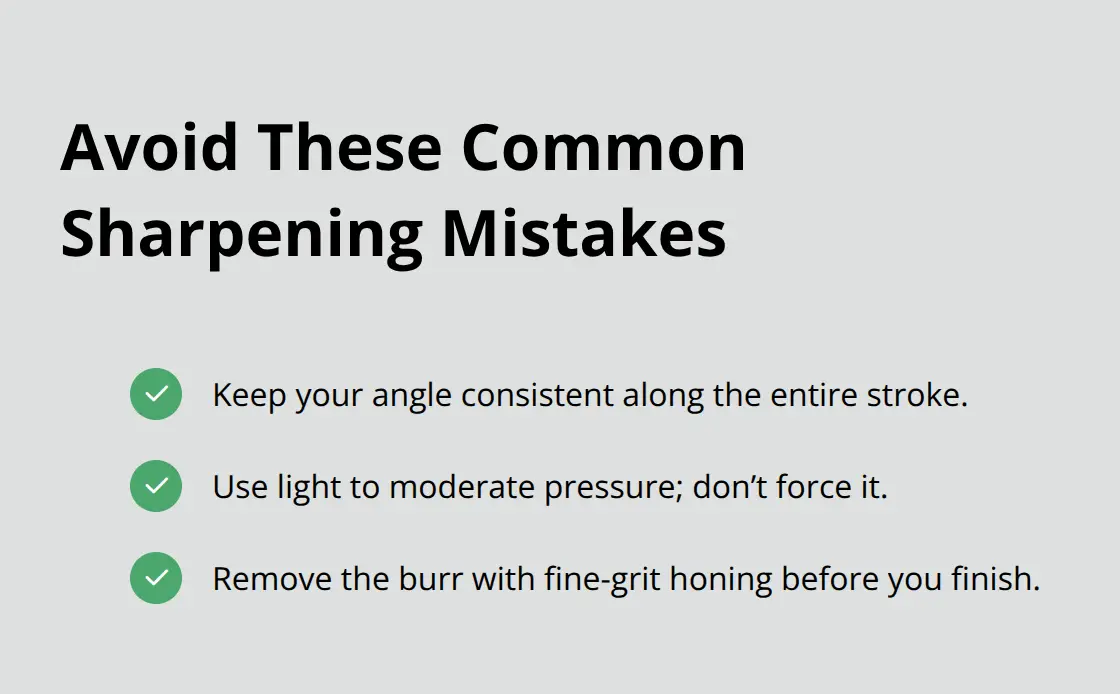
Hold the stone steady with your non-dominant hand, position your knife at the marked angle, and maintain consistent pressure across the blade length. Most people press too hard, thinking force equals sharpness, but whetstones work through abrasion, not brute strength. Use light to moderate pressure only, letting the stone’s grit do the work. One critical mistake ruins blades immediately: inconsistent angles throughout the stroke. If your wrist flexes or your hand drifts, you create an uneven bevel that won’t cut cleanly. Anchor your elbow against your body or bench and move your entire arm as a single unit rather than relying on wrist movement alone.
The Stroking Motion
The stroking motion itself matters more than most beginners realize. Draw the blade toward you along the stone in one smooth motion, keeping the tip and heel in contact throughout. Never push the blade away from you, as this risks the edge catching and damaging the stone or your hand. Complete 10 to 15 strokes on one side of the blade, then flip and repeat on the other side, maintaining your angle precisely. After sharpening, perform 5 to 10 honing strokes on a fine grit (6000 or higher) to remove the burr and refine the edge.
Removing the Burr and Testing Results
The burr, a thin metal lip formed during sharpening, must disappear completely or your edge won’t cut cleanly. Test sharpness using the tomato test: a sharp blade slices through tomato skin without crushing the flesh, while a dull blade squashes or tears. If the tomato test fails, your angle was likely inconsistent or your burr remains. Return to the stone, verify your angle with the marker method again, and repeat. This feedback loop accelerates learning far more than hoping your technique improved. Most people need 10 to 20 practice knives before achieving professional results, so start with inexpensive blades and expect imperfection during early attempts.
Final Thoughts
Sharpening knives becomes second nature once you master the fundamentals and commit to consistent practice. The core principle remains unchanged: maintain a steady angle, apply light pressure, and test your results honestly. Start with an inexpensive whetstone setup and practice on budget blades before trusting your technique on premium knives.
Common mistakes derail beginners immediately, but recognizing them prevents wasted effort and blade damage. Inconsistent angles throughout your stroke create uneven bevels that won’t cut cleanly, so anchor your elbow and move your entire arm as a unit. Excessive pressure grinds away metal unnecessarily, shortening your blade’s lifespan, so trust the stone’s abrasive grit instead of forcing results. Skipping burr removal leaves a thin metal lip that prevents clean cutting, so always finish with fine-grit honing strokes.
Your next step depends on your commitment level. Casual home cooks benefit most from combining daily honing steel maintenance with professional sharpening every 3 to 6 months, keeping costs minimal while preserving blade quality. Enthusiasts should invest in a quality whetstone setup, practice consistently, and build the muscle memory that transforms how to sharpen knives from frustration into confidence. Serious users pursuing professional-level results should explore separate grit stones and leather stropping, understanding that mastery requires dedication but delivers edges indistinguishable from professional services. Explore our recommended sharpening systems to find the right tool for your needs and skill level.