
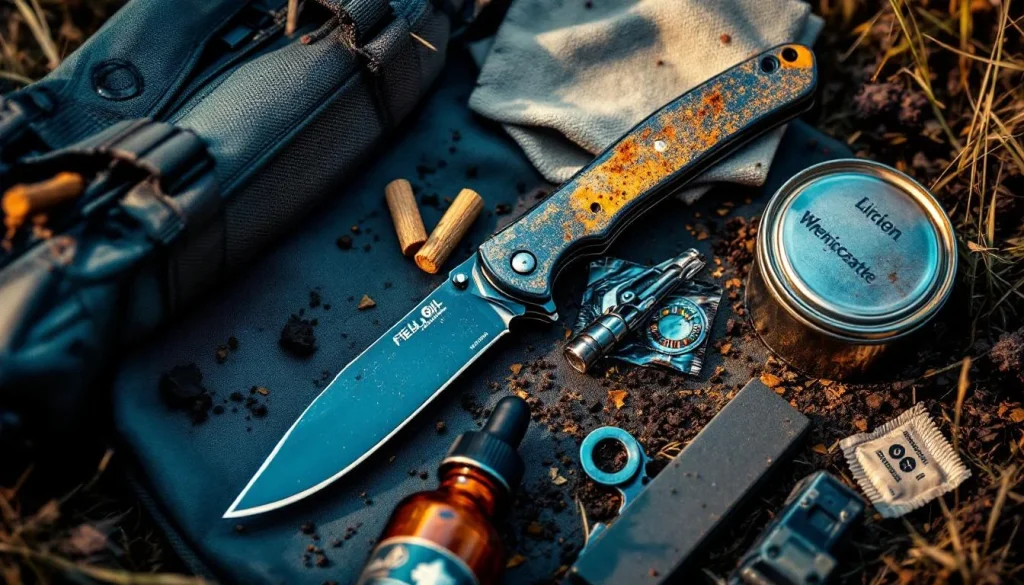

Your blade is only as good as its condition. Rust and corrosion can dull your edge, compromise performance, and turn a reliable tool into a liability in the field.
Rust prevention for blades doesn’t require complicated routines or expensive products. This guide covers practical, field-tested methods to protect your knife while keeping it sharp and ready when you need it most.
How Rust Forms and What Actually Stops It
Moisture, Oxygen, and the Corrosion Process
Rust forms when iron in your blade meets oxygen and moisture, and this reaction accelerates in saltwater, humid climates, and acidic environments. The speed matters more than you think. In corrosion testing using 3.5% saltwater exposure, standard carbon steel blades show visible rust within hours, while properly finished blades with mirror-polished surfaces resist corrosion far more effectively than rough or scratched finishes. Surface texture directly affects rust formation-a blade finished to 400 grit resists corrosion significantly better than one with machine marks or grinding lines left behind.
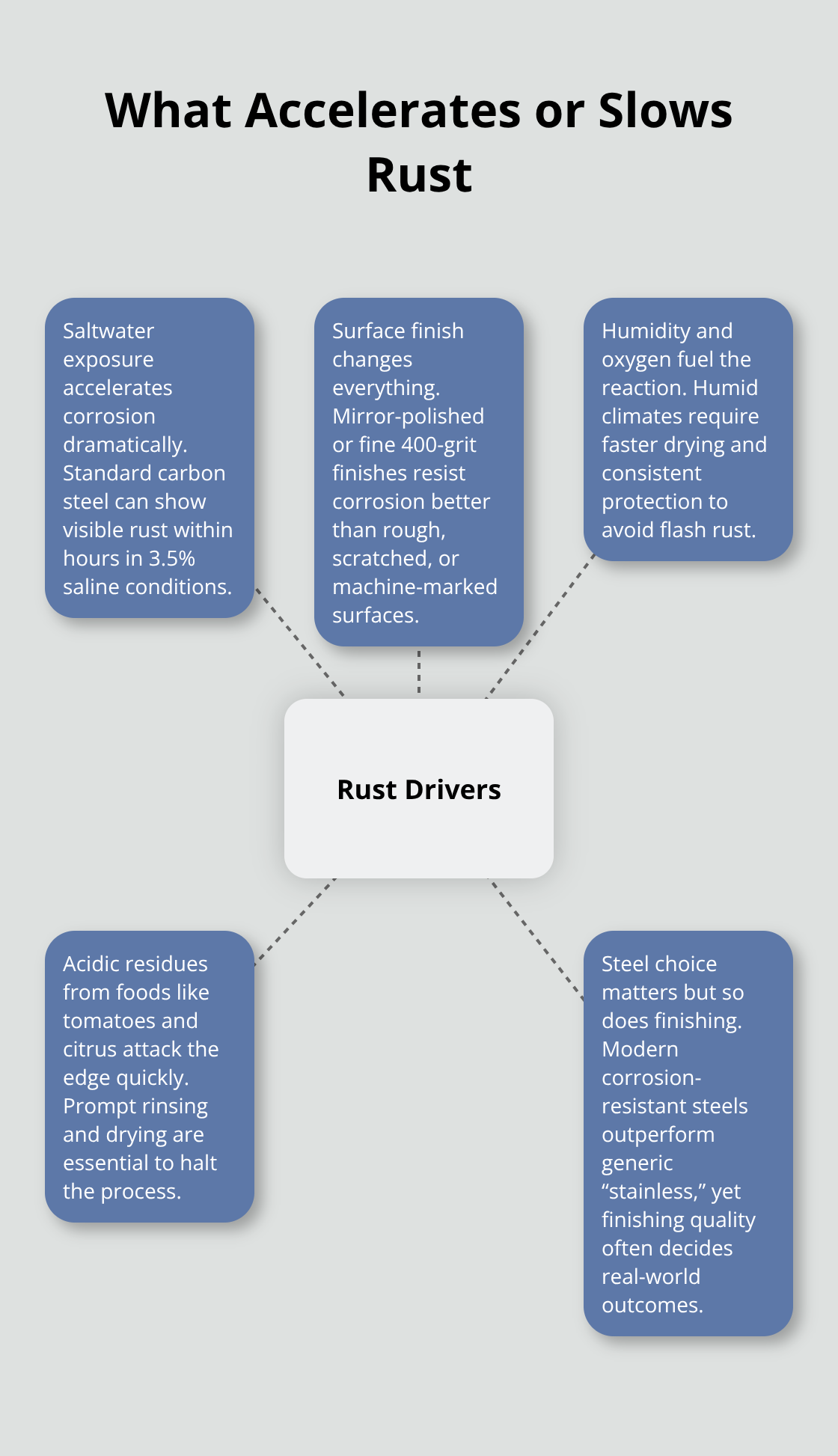
This tells you that your finishing process matters as much as your steel choice.
Acidic Foods and Edge Degradation
Acidic foods like lemon juice, tomatoes, and onions actively corrode metal and can ruin edge life if you leave them on a blade. In real-world testing, 1095 carbon steel loses sharpness quickly when exposed to acidic foods, while higher-chromium options like 440A hold up better. Rinse your blade promptly after cutting acidic items and dry it completely-this simple step prevents corrosion that no protective coating can fully reverse. Even the best rust prevention fails if you leave acidic residue sitting on the edge.
Steel Selection: Beyond the Stainless Label
Steel choice matters, but not in the way most people think. Stainless steels like XHP and ZDP-189 are marketed as premium options, yet they show significantly lower corrosion resistance in saltwater tests compared to steels specifically designed for field use like MagnaCut, LC200N, and Vanax. MagnaCut chromium stays in solution rather than forming chromium carbides, which actually strengthens corrosion resistance. Vanax offers extremely high corrosion resistance but requires careful heat treatment; tempering too hot can precipitate carbides and destroy that advantage.
The Hardness-Corrosion Trade-Off
Most stainless steel options max out around 60 to 61 Rc hardness before corrosion resistance drops off, forcing you to choose between a sharp blade and a rust-free blade. Carbon steel with proper maintenance and protective coatings often outperforms stainless steel in the field because you can push hardness higher without fighting corrosion trade-offs. If corrosion risk is genuinely high, select steel designed for saltwater or humid environments rather than betting on a stainless label that means nothing without proper testing data. Understanding your steel’s actual performance in your environment sets the foundation for choosing the right protection method.
How to Protect Your Blade in the Field
Immediate Drying: Your First Line of Defense
The moment your blade leaves your sheath, moisture and environmental exposure begin working against it. Effective rust prevention starts immediately after use, not days later when you notice the first dull spots. Dry your blade immediately after using it-this single step eliminates the conditions rust needs to form. Use a dry cloth and wipe both sides thoroughly, paying attention to the spine and handle junction where water collects. For carbon steel blades especially, this drying step is non-negotiable; leaving a blade wet overnight virtually guarantees surface rust.
Applying Protective Coatings
After drying, apply a thin protective film to seal out moisture. WD-40 offers quick, affordable protection and dries fast enough for frequent field use, while 3-in-1 oil works equally well for short-term storage between uses. If you want longer-lasting protection, FrogLube or Boeshield create durable coatings that outlast basic oils, though they require slightly more effort to apply evenly.
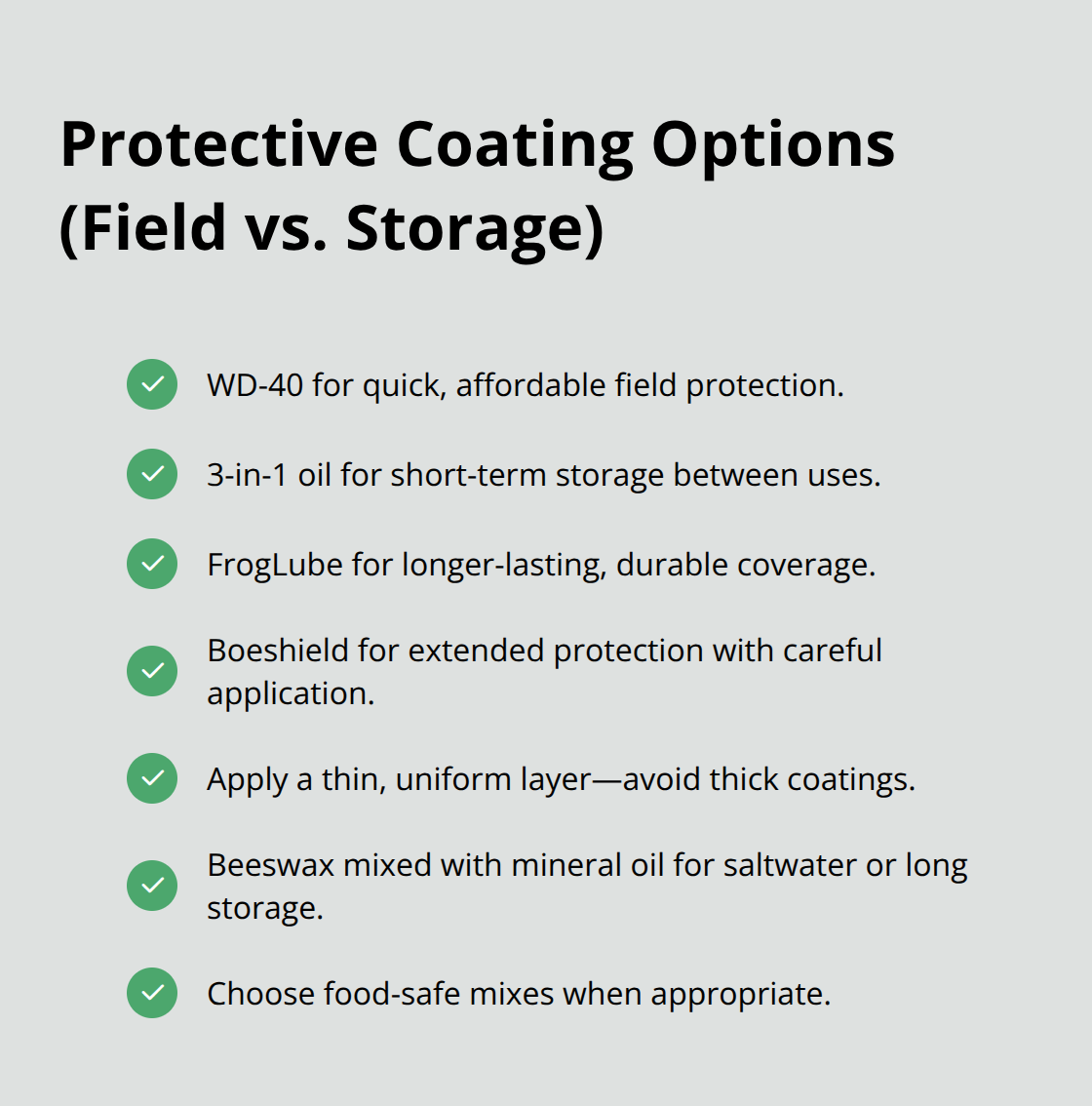
The key is consistency-a thin, uniform layer beats a thick, uneven coating that traps moisture underneath. For blades that see extended storage or harsh saltwater environments, beeswax mixed with mineral oil creates a protective layer that works well for carbon steel because the wax seals moisture out effectively, and it remains food-safe if you mix it properly.
Storage Conditions That Prevent Corrosion
Storage conditions determine how long your protection actually lasts. Keep your blade in a dry environment-humidity is rust’s best friend, and even sealed storage fails if moisture levels stay high. Silica gel packs placed near stored blades absorb ambient moisture and prevent corrosion during long periods between uses. For field carry, a quality sheath that allows air circulation prevents moisture from building up inside the blade cover; leather sheaths work better than sealed synthetic options because they breathe. If you store multiple blades together, separate them with cloth or paper to prevent moisture from concentrating where blades touch. Never store a blade damp or coated with residue, no matter how convenient it seems.
Layered Maintenance for Maximum Protection
A few extra minutes of cleaning and drying now eliminate weeks of rust removal work later. Reapply protective coatings after any exposure to moisture, saltwater spray, or acidic food residue-this layered maintenance approach of drying, oiling, then waxing or filming creates the most effective defense. The investment is minimal: a cloth, some oil, and beeswax cost less than a single professional rust removal service, and they keep your edge sharp and ready for the next use. These field-tested techniques form the foundation of blade care, but they work best when combined with a consistent maintenance routine that fits your lifestyle and use patterns.
Keeping Your Edge Sharp Without Sacrificing Protection
Design a Maintenance Routine That Works in the Field
Protection and usability exist in constant tension. A blade coated in heavy wax or oil stays rust-free but becomes awkward to deploy quickly when you need it. The solution isn’t choosing between sharp and safe-it’s designing a maintenance routine that keeps your blade protected without creating friction during actual use. Active users need a system that works in the field, not just in storage. Start with a thin, easily removable protective layer rather than thick coatings that require scrubbing before each use. A light film of mineral oil or FrogLube wipes clean in seconds and still provides meaningful corrosion resistance.
Choose Your Coating Based on Use Frequency
Beeswax mixed with mineral oil works better for extended storage between field trips because it doesn’t transfer to your hands or gear, but pure beeswax takes longer to remove before use. The practical choice depends on your carry frequency: if you use your blade multiple times weekly, skip the wax entirely and stick with oil. If your knife sits in a pack for weeks between trips, beeswax becomes worth the extra effort. Your sheath condition matters as much as the coating itself. A sheath that allows air circulation prevents moisture from accumulating inside, which means you can carry your blade with minimal protection and still avoid rust. Sealed synthetic sheaths trap humidity and force you into heavier protective coatings to compensate.
Protect Your Blade During Honing and Sharpening
Honing and sharpening create unexpected corrosion risks that most users overlook completely. When you run a ceramic or steel honing rod across your blade, you expose fresh metal that hasn’t been protected yet. That exposed steel oxidizes quickly if left wet or exposed to humidity after honing. Dry your blade immediately after honing-don’t wait until later.
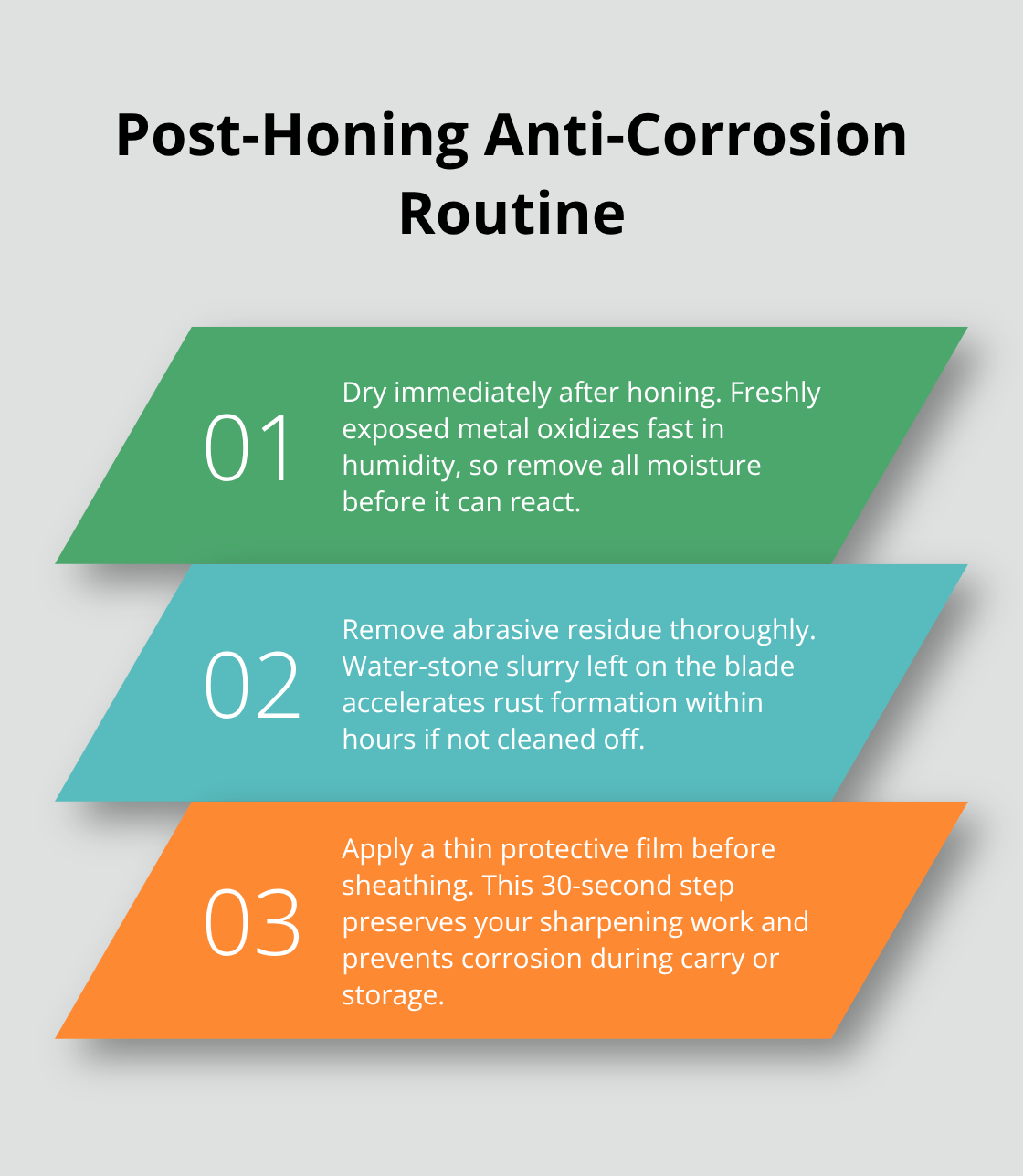
Water-stone residue left on the blade accelerates rust formation within hours. After sharpening, wipe the blade dry with a clean cloth, then apply a thin protective film before returning it to your sheath. This takes 30 seconds and prevents corrosion that would otherwise undo your sharpening work.
Align Your Sharpening Schedule With Your Usage Patterns
For carbon steel blades, try light honing with a ceramic rod every few uses rather than aggressive sharpening sessions during humid seasons or before extended storage. Frequent light honing keeps your edge aligned without exposing fresh metal, and it reduces the time your blade spends wet during maintenance. If you must sharpen heavily, do it when you plan to use the blade within days so the protective coating gets refreshed through regular handling and reapplication. The worst approach is sharpening your blade, applying heavy protection, then storing it for a month-that extended contact between fresh metal and thick coatings can actually trap moisture underneath. Treat honing as part of your pre-use routine rather than a separate maintenance task, and your blade stays both sharp and protected without requiring elaborate systems.
Final Thoughts
Rust prevention for blades demands consistency, not complexity. The techniques throughout this guide-immediate drying, protective coatings, proper storage, and aligned maintenance routines-work because they address rust at every stage of your blade’s life. A cloth, some oil, and basic discipline accomplish what most users think requires professional intervention, and you can start today with tools you already own.
Your lifestyle determines which approach fits best. If you carry your blade daily, a thin mineral oil layer and a breathable sheath eliminate rust without creating friction during deployment. If your knife sits in a pack for weeks between trips, beeswax mixed with mineral oil justifies the extra application time because extended storage demands heavier protection. Match your prevention method to your actual usage pattern rather than adopting someone else’s routine that doesn’t fit your needs.
Start with one technique that fits your routine, master it, then add others as your habits solidify. Explore our knife care collection to find the right tools and products for your specific situation, and your blade will reward the effort with years of reliable performance.