
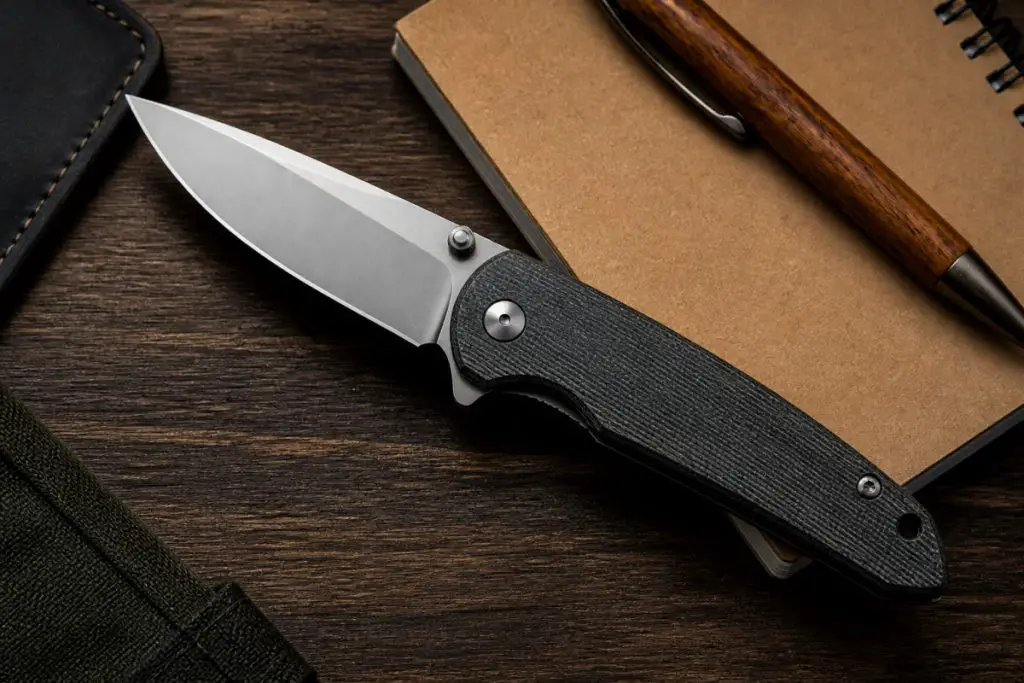

New York Knife Laws: City and State Guide
The quick answer
Short version: New York knife laws are complex and enforce differently at the state and city level. Across New York State, possession and use of knives is regulated with an emphasis on mens rea (intent) and location. New York City applies stricter local rules and active enforcement, especially in public places and transit. If you carry an everyday folding EDC, focus on intent, how it’s carried (concealed vs. open), blade type (manual vs. automatic), and where you are (parks, schools, courts, transit hubs). This guide helps everyday EDC enthusiasts understand the practical differences between state statutes and New York City enforcement so you can reduce legal risk.
Context
If you live in or visit New York and carry an everyday folding knife, it’s important to separate statewide statutory language from how New York City police and local prosecutors treat knife encounters. State law provides the baseline: what is illegal everywhere in New York State. City-level policy and local ordinances — plus on-the-ground police practices — affect enforcement in New York City boroughs. This guide is tailored to daily EDC gear enthusiasts who want clear, practical information about carrying responsibly without turning toward legal advice.
Specs (key definitions and baseline rules)
Before the deeper legal discussion, here are the core concepts you should keep in mind:
- Mens rea (intent): Many New York statutes and prosecutions hinge on whether a person intended to use a knife unlawfully. Carrying an everyday tool is not the same as carrying with intent to harm.
- Concealed vs. open carry: How a knife is carried can affect whether it is perceived as a weapon or a tool. Concealment increases scrutiny in many encounters.
- Blade mechanism: Manual folding knives, assisted-open knives, and automatic (switchblade) or gravity knives may be treated differently. Certain mechanisms attract more attention and may be restricted.
- Restricted locations: Schools, courthouses, certain public buildings, and transit facilities commonly have bans or enhanced penalties for weapons possession.
- Local enforcement differences: NYC has police resources and local administrative codes that lead to more frequent stops, searches, and prosecutions compared with many upstate jurisdictions.
Deep-dive analysis
This section breaks down state law, New York City enforcement priorities, and specific categories that matter to EDC users: intent, concealed carry, automatic knives, and restricted locations.
State law overview
New York State statutes set the legal baseline. State prosecutors evaluate possession cases against statutory language and case law, often focusing on whether the carrier intended to use the knife in a criminal way. For many low-risk folding knives carried for utility — pocket clip, low-profile, used at work or for daily tasks — prosecutions are less likely when there is clear, noncriminal intent and the knife is not used in a threatening fashion. Still, certain blade types and concealed carry scenarios raise legal exposure, especially if an officer believes the item is a weapon rather than a tool.
New York City enforcement
New York City enforces both state law and local rules; its policing practices and prosecutorial policies can be stricter. The NYPD and local prosecutors may treat a stopped individual carrying a large, concealed blade or a rapid-opening automatic as having greater public-safety risk. In dense urban environments, possession in subway stations, parks, and near schools is often taken seriously. City administrative rules and facility policies (for example, MTA and courthouse rules) can also restrict knives even where state law might not.
Intent and common tests police use
Intent usually matters. Officers and prosecutors may look for indicators such as:
- How the knife was carried (concealed, clipped, holstered, sheathed).
- Statements made at the time of encounter (admissions about carrying for protection vs. work-related use).
- Context — time of night, presence at a confrontation, or previous criminal history.
For EDC users, documenting legitimate use (work ID, tool use examples) and keeping a low-profile carry style reduces ambiguity.
Concealed carry and open carry
Concealment increases suspicion in many encounters. Even if a folding blade is carried folded in a pocket, an officer may interpret hidden possession differently than an openly visible utility tool. Open carry in New York City is not a blanket legal shield: a large fixed blade openly displayed in public spaces can trigger detention or arrest if perceived as a threat.
Automatic, assisted, and gravity knives
Switchblades, gravity knives, and other automatic-opening blades often draw the most legal attention. Federal law historically regulated the interstate commerce of switchblades but did not universally ban possession; state and local rules vary. In New York, knives that open automatically or by gravity may be subject to additional restrictions and can prompt stronger enforcement actions, especially in NYC. For EDC folding-knife enthusiasts, consider the legal risk of carry for any automatic mechanism in urban settings.
Restricted locations
Certain locations generally trigger enhanced penalties or zero-tolerance enforcement. These typically include:
- Schools and college campuses
- Courthouses and many government buildings
- Public transit facilities and MTA property
- Airports and secure areas
- Public events and certain parks
Facility-specific rules and property owners’ rights mean you should assume a knife may be forbidden even if state law would allow possession in other places.
Official-source table
| Official source | What it covers | Why it matters to EDC carriers |
|---|---|---|
| New York State Penal Law (state statutes) | Defines weapons offenses, elements like intent, and baseline penalties | Baseline statutory rules that apply throughout New York State |
| New York City Administrative Code and local rules | City-level regulations and administrative policy | Can create stricter enforcement policies inside NYC limits |
| NYPD policy & patrol guidance | Operational guidance used by officers | Influences how stops and searches involving knives are handled |
| Facility rules (MTA, courts, schools) | Property-specific prohibitions and penalties | May ban knives regardless of broader legality |
City versus state comparison
| Topic | New York State | New York City |
|---|---|---|
| Primary focus | Statutory definitions, mens rea, statewide penalties | Local enforcement priorities, facility rules, active policing |
| Concealment | Evaluated against intent; concealed possession can be criminal in some contexts | Higher scrutiny for concealed knives in public and transit |
| Automatic blades | Restricted and treated seriously in prosecutions | Actively targeted by enforcement |
| Restricted locations | State law recognizes specific enhanced-location rules | Broader set of facility and local prohibitions (MTA, parks, courts) |
| Practical risk for EDC | Lower when carried responsibly and used as a tool | Higher due to dense population, heavy enforcement, and public sensitivity |
Utility (practical carry scenarios and transport)
Below are common transport and carry scenarios for EDC enthusiasts and the practical legal considerations in New York.
Transport scenarios
- Driving across boroughs or state lines: Keep the knife sheathed or in a closed container and stored out of immediate reach if you are transporting it in a vehicle. Crossing state lines can introduce other jurisdictions’ laws; when in doubt, secure the blade and avoid using it until you are certain of local law.
- Public transit (subway, bus, commuter rail): Expect strict enforcement in NYC transit facilities. Avoid carrying automatic-opening knives and consider a low-profile manual folder. Facility rules (MTA) may prohibit knives even if state law would allow them elsewhere.
- Walking in public, urban core: Keep carry style discreet and oriented toward utility — pocket clip, closed blade. Avoid displaying the blade or carrying items associated with defensive purposes.
- Traveling to airports: Airport security and TSA rules restrict knives in carry-on luggage; check the airline and airport guidance and place knives in checked baggage if permitted.
- Workplace or job sites: Employer rules often prohibit knives; follow workplace policies and, if you legitimately need a blade for work, carry visible evidence (ID, tools) that supports legitimate use.
What to do during an encounter
- Stay calm and comply with lawful officer instructions.
- Avoid reaching for your knife unless asked; sudden movements can escalate perceived threat.
- Clearly state non-threatening intent (e.g., “It’s a tool I use for work”), but avoid lengthy arguments.
- If detained or charged, seek legal counsel promptly.
Alternatives
If you find New York City enforcement riskier than your comfort level, consider these alternatives for everyday cutting needs:
- Carry a smaller, low-profile manual folding blade with a conservative clip and discreet carry style.
- Use non-blade EDC tools where possible (multi-tools with small cutters or safety box-cutters) for environments with strict rules.
- Store your knife securely in checked luggage when flying or in a locked vehicle when entering restricted facilities.
- Use local locker services or personal tool kits left at work sites when commuting through high-enforcement areas like New York City.
Verdict
For daily EDC folding-knife enthusiasts, the practical takeaway is straightforward: know the baseline state law, expect stricter enforcement in New York City, and reduce legal exposure by choosing conservative carry styles and avoiding automatic mechanisms in high-enforcement areas. The phrase “New York knife laws” captures a patchwork of statute, enforcement practice, and facility-level rules — and your safest course is to carry with noncriminal intent, be mindful of where you are, and adapt your gear for local conditions.
If you frequently travel into Manhattan, Brooklyn, Queens, the Bronx, or Staten Island, err on the side of caution: minimal profile, reliable folding mechanism (manual), and clear evidence of legitimate use (tools, job). When in doubt about a facility’s policy, assume knives are prohibited and secure them accordingly.
Legal change log (dated)
Laws and enforcement approaches have evolved; below is a concise dated log of notable shifts that influence how carriers should think about risk. This timeline highlights trends rather than exhaustive legislative history.
- Early 2000s: Increased focus on knife-related street violence led to sharper enforcement in major urban areas, including New York City, with police training emphasizing weapons interdiction.
- 2010s: Several high-profile prosecutions and court decisions placed more emphasis on intent and utility versus solely mechanical features, prompting debate over gravity and switchblade interpretation.
- Mid-2010s to 2020: Courts and legislatures grappled with definitions of gravity knives and automatic mechanisms. Local enforcement policies began to differ more visibly between NYC and upstate jurisdictions.
- 2020–present: Continued municipal focus on public-safety enforcement in transit and crowded venues; facility-level prohibitions (courts, MTA) tightened. Practical enforcement often reflects local crime and policing priorities more than mechanical classifications alone.
FAQs
Can I legally carry a folding pocketknife in New York?
Generally, carrying a small folding pocketknife for legitimate everyday tasks is less likely to trigger prosecution if there is no intent to use it unlawfully. However, location, carry method, blade type, and police interpretation matter — especially in New York City. Always be mindful of restricted locations and local enforcement.
Are automatic or switchblade knives illegal in New York?
Automatic and certain gravity-opening knives attract greater legal scrutiny and may be restricted or subject to enhanced enforcement. Avoid carrying automatic-opening mechanisms in dense urban areas and facilities that explicitly ban such items.
Does it matter if my knife is concealed?
Concealed carry can increase legal risk because concealment is sometimes associated with intent to use unlawfully. If you must carry in public, prefer low-profile, folded carry and avoid circumstances that could make possession appear threatening.
Where can I check official rules and recent updates?
Consult state statutes and local administrative codes for the most authoritative statements. Facility rules (transit authorities, courthouses, and schools) also matter. For general local content related to knives and EDC, you can find related posts and product entries on this site’s sitemaps: https://knifepulse.com/post-type-post-sitemap-1.xml and https://knifepulse.com/post-type-product-sitemap-1.xml.
Final note: This guide is informational and aimed at helping EDC enthusiasts reduce legal risk by understanding how New York State law and New York City enforcement differ in practice. Laws and enforcement policies change over time; if you face a legal issue, consult a qualified attorney licensed in New York State.