
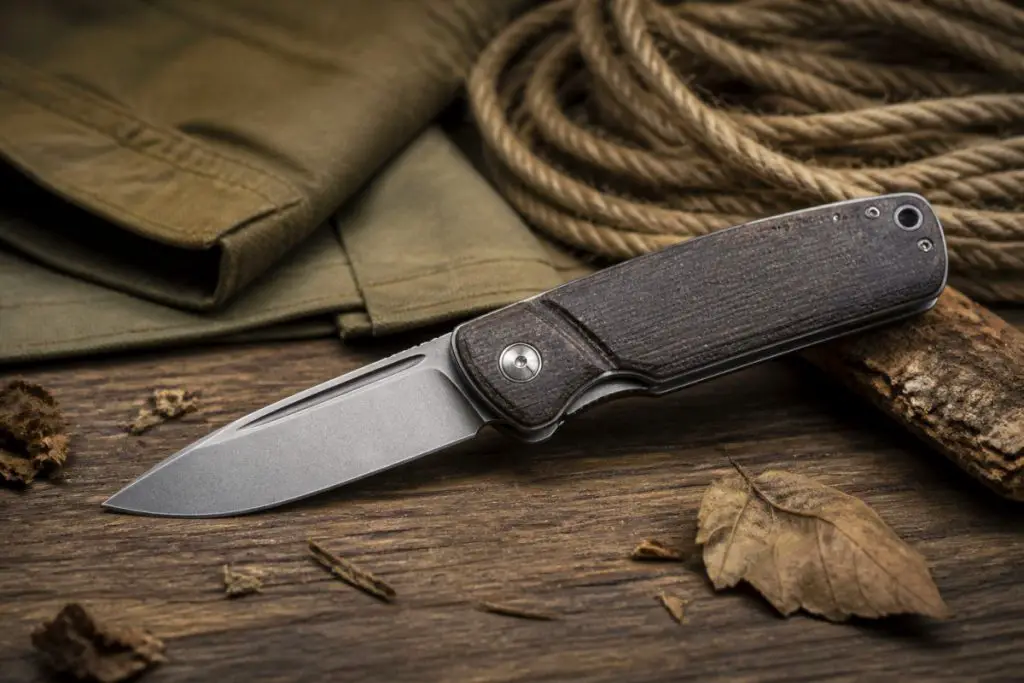

1095 vs 80CrV2 vs 5160 for Hard Use
Practical comparison for bushcraft practitioners: toughness, edge stability, abrasion resistance, corrosion behavior, field repair, and the heat-treatment and geometry cautions you need to use these steels safely in the field.
The quick answer
At representative hardness for hard use, 5160 is the best choice when toughness and batoning durability are the top priorities, 80CrV2 sits in the middle with improved abrasion resistance and good edge life, and 1095 is the easiest to restore in the field and performs well if kept slightly softer to avoid chipping. If you must rank them for bushcraft: 5160 for choppers and heavy batoning, 80CrV2 for knives that need longer edge life without frequent resharpening, and 1095 for compact EDC bushcraft knives that are re-sharpened frequently and carried in drier climates.
Context
Bushcraft use covers a range of tasks: feathering and baton-splitting, light carving and fine food prep, shelter building, and heavy chopping. Steels behave differently under those loads. This article compares 1095 vs 80CrV2 vs 5160 at realistic, representative hardness levels used by reputable makers for outdoors blades. The goal is to help you choose the right steel for your environment—whether you’re in the damp forests of the Pacific Northwest, the peat and moors of the UK, Scandinavian bushlands, or the hot, abrasive conditions of Australia and other global regions.
Specs (representative ranges)
Below are approximate, typical specs and hardness ranges knife makers use for these steels. Exact chemistry and hardening practices vary by mill and maker, so treat these as practical guidelines rather than absolutes.
| Steel | Approx. composition (main alloying) | Representative hardness for hard-use knives (HRC) | Notes |
|---|---|---|---|
| 1095 | ~0.90–1.05% C; very low alloy | 55–58 HRC | Simple carbon steel; easy to heat-treat and sharpen; low corrosion resistance. |
| 80CrV2 | ~0.75–0.90% C; moderate Cr; added V (vanadium) for fine carbides | 57–60 HRC | Higher abrasion resistance than simple carbon steels; holds edge longer but needs slightly more effort to sharpen. |
| 5160 | ~0.50–0.65% C; ~0.7–1.0% Cr; sometimes small V | 54–58 HRC | Alloyed spring steel prized for toughness and shock resistance; commonly used in large knives and swords. |
Deep-dive analysis
Toughness
Toughness is the ability to absorb shock without cracking or chipping. For heavy tasks (batoning, prying, chopping wet wood), a slightly lower HRC with a tougher steel wins.
- 5160 — Typically the toughest of the three when heat-treated for toughness. It is designed as a spring steel and resists edge impact and large deformations. This makes it the preferred choice for choppers and heavy batoning blades.
- 1095 — Good toughness if tempered lower (55–57 HRC). Very forgiving to rough use, but it lacks alloying elements that enhance hardenability, so edge retention at higher hardness suffers.
- 80CrV2 — Good toughness, but because it’s often run slightly harder to exploit wear resistance, it can be more prone to chip if the geometry is too thin or the tempering is too high for impact tasks.
Edge stability and abrasion resistance
Edge stability refers to how well a sharpened edge resists rolling or micro-chipping; abrasion resistance is how well the steel stands up to wear from use on gritty or silica-rich woods.
- 80CrV2 — Best abrasion resistance here because vanadium forms hard, fine carbides. Expect longer edge life between sharpenings, especially cutting fibrous or dirty materials.
- 5160 — Moderate edge stability; better than plain 1095 in sustained abuse because the alloying and toughness let it keep a usable profile longer, but it will wear faster than 80CrV2.
- 1095 — Least abrasion resistant; edges dull sooner on sandy wood or gritty tasks, but it is very easy to re-profile in the field with a file or stone.
Corrosion resistance
None of these are stainless. Expect rust unless you take care—especially in humid, coastal, or tropical environments common in many bushcraft areas.
- 1095 — Most prone to rust. Regular wiping, oiling, or wax is necessary. In temperate or humid regions (Pacific Northwest, UK, Scandinavia in wet seasons), plan for maintenance.
- 80CrV2 — Slightly better due to chromium content, but still requires care. Works well in mixed climates if oiled and stored dry.
- 5160 — Performs similarly to 80CrV2; chromium improves oxidation resistance marginally compared with plain 1095, but it is not stainless steel.
Ease of field repair and sharpening
Field repair covers re-profiling, stropping, and emergency edge-setting.
- 1095 — Easiest to sharpen with basic stones or even a file. Recommended for people who prioritize simple field maintenance and minimal kit weight.
- 5160 — Also easy to sharpen but because it is tougher, it can take a little more time to re-profile than 1095. Files and stones still work well.
- 80CrV2 — Takes longer to reprofile due to vanadium carbides; coarse diamond stones or abrasive belts speed the job. Not a deal-breaker for bushcraft but plan for slightly more effort in the field.
Heat-treatment sensitivity
Heat treatment changes everything. A poorly heat-treated blade can behave worse than a different steel treated correctly. General cautions:
- Run 5160 slightly softer for batoning tasks (54–56 HRC) to maximize toughness. If you receive a 5160 blade at 57–58 HRC, expect better edge life but reduced impact tolerance.
- 1095 at 58–59 HRC will hold a keener edge but is at higher risk of chipping under lateral shock. For multipurpose bushcraft, 55–57 HRC is often optimal.
- 80CrV2 benefits from a stable, properly tempered heat treatment—too hard and you risk chipping; too soft and you lose the abrasion advantages. 58–60 HRC is a common compromise for edge retention without excessive brittleness.
Geometry matters as much as steel
Blade geometry—thickness at the spine, grind type, and edge radius—often has more practical impact on performance than a small difference in alloy. Important geometry cautions:
- Thin, acute edge angles (
- Convex or Scandi grinds with thicker proximal geometry increase durability for chopping. On 5160, use robust geometry to exploit its toughness.
- Be cautious with differential heat treatments (like hamon-style) on these steels for bushcraft blades—if the edge is too hard and spine too soft without proper temper control, you can get failure at the transition under stress.
Utility: ranked use-cases for bushcraft tasks
Below are practical rankings (1 = best, 2 = good, 3 = adequate) for each steel across common bushcraft blade roles: compact knives, choppers, and batoning blades. These rankings assume representative, sensible heat-treatment and robust geometry for the intended role.
| Use-case | 1095 | 80CrV2 | 5160 | Rationale |
|---|---|---|---|---|
| Compact bushcraft/EDC knives | 1 | 2 | 3 | 1095 is easiest to resharpen on the trail; 80CrV2 holds edge longer; 5160 is overbuilt for small knives and harder to keep keen quickly. |
| Choppers / large clearing knives | 3 | 2 | 1 | 5160’s toughness and spring-steel heritage make it ideal for repeated chopping. 80CrV2 works if geometry is robust; 1095 lacks alloying toughness for repeated hard strikes. |
| Batoning / heavy splitting blade | 3 | 2 | 1 | Same as choppers: batoning favors toughness and ductility—5160 excels when heat-treated for impact resistance. |
Practical carry recommendations by environment
- Humid/coastal regions (e.g., parts of the Pacific Northwest, UK coasts): prefer 80CrV2 or 5160 over 1095 if you can’t reliably dry and oil your blade frequently.
- Dry climates/short trips: 1095 is an excellent choice for lightweight users who plan to sharpen regularly.
- Expeditions where you expect heavy splitting and chopping: prioritize 5160 with a robust profile and a temper in the mid-50s HRC.
Alternatives
If none of these three fit your needs exactly, consider these common alternatives and why they might be chosen instead:
- Powder metallurgy steels (e.g., CPM variants) — much higher wear resistance and corrosion options exist, but they are more expensive and harder to field-sharpen.
- Tool steels like 5160’s cousins (9260, 52100) — 52100 has better edge life but less toughness than 5160; 9260 is similar in spirit to 5160 for spring-like toughness.
- Stainless options (e.g., 14C28N or S35VN) — better corrosion resistance, variable toughness and edge life; worth considering if you operate in consistently wet conditions and want lower maintenance.
Verdict
Choosing between 1095 vs 80CrV2 vs 5160 comes down to trade-offs:
- Choose 5160 if your primary tasks are chopping and batoning and you want a blade that tolerates shock and abuse. Use slightly softer tempering and robust geometry.
- Choose 80CrV2 if you want a balance of edge retention and toughness—good for general bushcraft where you want fewer touch-ups and better wear resistance without sacrificing too much impact tolerance.
- Choose 1095 if you value simplicity, low-cost blades, and quick field sharpening. Be diligent about corrosion control if you’re in damp or salty environments.
Across the globe, these same principles apply—from Scandinavian forests to Australian scrub and North American woodlands. The local climate and your willingness to maintain the blade are as important as the steel choice.
FAQs
- Which of these steels is easiest to sharpen in the field?
- 1095 is the easiest to re-profile with simple stones and files, followed by 5160. 80CrV2 can require coarser or diamond abrasives to move metal quickly.
- Can I use a 1095 knife for heavy batoning?
- While a properly tempered 1095 can survive occasional batoning, repeated heavy batoning is better handled by tougher steels like 5160. If you use 1095 for batoning, use conservative tempering and thicker geometry.
- Is 80CrV2 stainless?
- No. 80CrV2 has increased chromium compared to plain carbon steels which gives it better corrosion resistance, but it is not stainless. Regular maintenance is required in humid environments.
- How should I choose hardness for my bushcraft knife?
- For general bushcraft versatility pick a temper in the mid- to high-50s HRC for balance. For heavy-impact tasks reduce hardness slightly (low- to mid-50s HRC) to increase toughness. For maximum edge life and less impact, a higher HRC can be chosen but expect more chipping risk.