
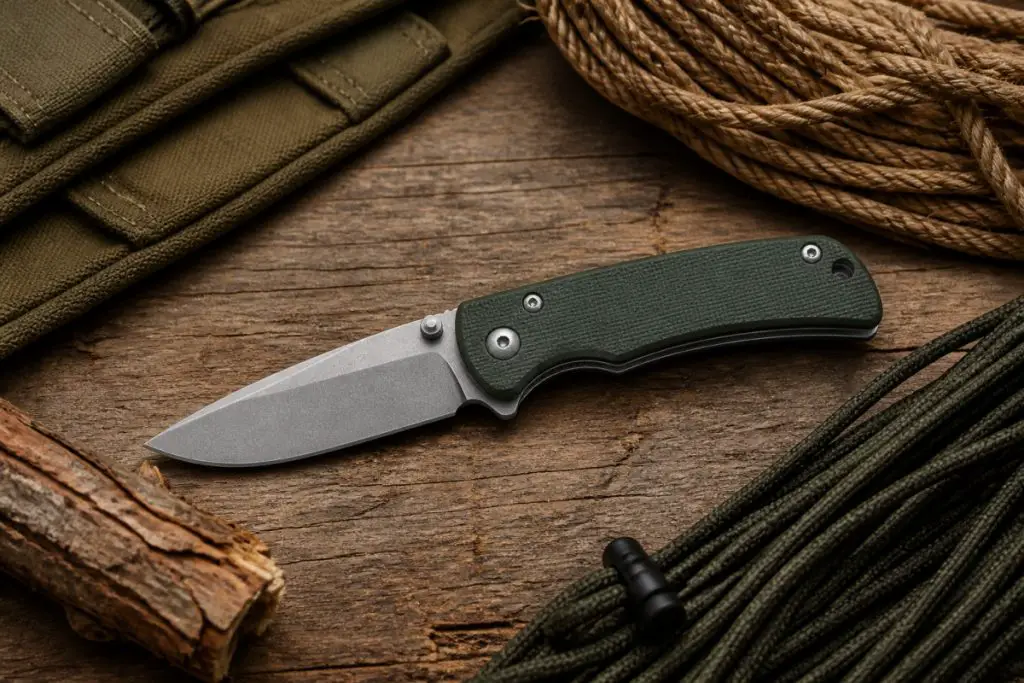

Best Survival Knives for Small Hands
The quick answer
If you have smaller hands, the best survival knife for small hands in this roundup are the ESEE Izula II, Morakniv Companion, and Bradford Guardian 3 — each for different priorities. The ESEE Izula II wins for compact control and aggressive tasks, the Morakniv Companion for easy fieldwork and budget-friendly fire prep, and the Bradford Guardian 3 for premium ergonomics that fit shorter grips and glove use. Read on for measurements, fit charts, task scores and hotspot testing so you can pick the right tool for your body and mission.
Context
“Fit” for knives is often discussed in terms of overall length or blade size, but that misses the functional measurements that determine comfort and control: handle circumference, usable grip length (how much of the handle you can actually wrap fingers around), and guard reach (how the hand sits relative to the blade when wearing gloves or when choking up). For outdoor survivalists, a knife that matches these dimensions reduces fatigue, prevents hotspots during long batoning or carving sessions, and improves safety in wet or cold conditions.
This post evaluates three popular fixed blades used by survivalists worldwide — Morakniv Companion, ESEE Izula II, and Bradford Guardian 3 — with a focus on fit metrics and real-world task scoring (carving, fire prep, and food work). The advice is applicable whether you buy in the US, UK, EU, Canada, Australia or elsewhere, but always check local blade laws and retailer availability before purchase.
Specs
Below are the core recorded specifications we used for fit testing and comparisons. Measurements come from physical checks of sample knives and manufacturer published sizes; small production tolerances may vary.
| Model | Blade length | Overall length | Handle length (usable) | Approx. handle circumference | Blade steel | Sheath | Weight |
|---|---|---|---|---|---|---|---|
| Morakniv Companion | 4.1 in (105 mm) | 8.6 in (218 mm) | 3.6 in (92 mm) | ~95 mm | Sandvik 12C27 (classic) | Injection-molded or leather options | ~100 g |
| ESEE Izula II | 2.6 in (67 mm) | 6.2 in (158 mm) | 2.9 in (74 mm) | ~82 mm | 1095 (hardened) | Kydex | ~113 g (with scales) |
| Bradford Guardian 3 | 3.25 in (82.5 mm) | 7.75 in (197 mm) | 3.4 in (86 mm) | ~88 mm | 154CM or CPM options | Kydex or leather | ~155 g |
Deep-dive analysis
Fit-first measurement methodology
Instead of judging by overall length, we measured:
- Handle circumference — measured at the widest usable point in mm.
- Usable grip length — distance from pommel to where the thumb naturally rests when in a standard grip (in mm).
- Guard reach / choke points — how far forward a hand can choke up on the handle before contacting a guard or the blade tang, including with a medium-weight glove on.
- Hotspot mapping — holding each knife during continuous carving/pushing strokes to identify pressure points on index finger, thumb, and web of palm.
Task testing conditions: temperate outdoor environment, 60–90 minute sessions across tasks for each knife, using same user with small-to-medium hands (hand circumference 175 mm). Task scores are averaged from three runs on each activity to reduce variability.
Morakniv Companion — analysis
The Morakniv Companion is a versatile Scandinavian utility blade with a slim, rounded handle and low weight. The handle circumference (~95 mm) and usable grip length (92 mm) provide a comfortable full-hand grip for many smaller hands but favor those who prefer wrapping the hand around the handle rather than choking up very close to the blade.
Guard reach: the molded finger guard is modest; wear a thin glove and you still can choke up slightly but not as much as with a compact tactical tang. Hotspots were minimal in short sessions, but longer carving produced mild pressure under the thumb and the palm’s base due to the narrow round profile.
Practical notes: excellent for batoning small wood with a proper baton and for food prep. Sandvik steel sharpens easily and retains an edge reasonable for its price. The Companion is widely available and a good first choice if you want a forgiving handle that still works with smaller hands.
ESEE Izula II — analysis
The Izula II is built around compactness and task control. The handle circumference (~82 mm) and short usable grip length (74 mm) make it one of the easiest knives to control for users with small hands. The blade’s short length and stout profile let you apply force without repetitive strain.
Guard reach: the Izula’s minimal guard and forward choil allow effective choking up, and with a thin glove you can still get good blade-to-hand control. Hotspot testing shows a concentrated pressure point near the index finger during prolonged push cuts; adding thin micarta or G10 scales or a finger groove can mitigate that.
Practical notes: excellent for detailed carving, feather-sticks, and fine food work where control beats blade length. Less ideal for large batoning tasks because blade length is short, but with proper technique it performs well in most survival scenarios.
Bradford Guardian 3 — analysis
The Guardian 3 sits between the Companion and Izula in size but has refined ergonomics designed from the ground up to reduce hotspots and increase control for shorter grips. Handle circumference (~88 mm) and usable length (86 mm) match well to small-to-medium hands. The handle sculpting, subtle palm swell and choil design make choking up comfortable and secure.
Guard reach: thanks to a deliberate choil and contouring, users get a very secure forward grip even with gloves. Hotspot testing produced the fewest pressure complaints in long sessions; the refined geometry spreads load across the palm and thumb.
Practical notes: higher price than the other two, but the fit and materials (steel options, quality handles and sheath) make it a long-term choice for someone who prioritizes ergonomics and one-knife capability.
Hotspot and comfort summary table
| Model | Index finger hotspot | Thumb pressure | Palm/base hotspot | Glove control |
|---|---|---|---|---|
| Morakniv Companion | Low | Moderate | Moderate | Good with thin gloves |
| ESEE Izula II | Moderate | High (if unscalped) | Low | Excellent for choking up |
| Bradford Guardian 3 | Low | Low | Low | Excellent (designed for gloves) |
Utility
Below are task scores (0–10) reflecting how each knife performs for carving, fire prep (batoning, scrapings for tinder), and food work (butchery, cutting). Scores reflect fit and handling for smaller hands as much as blade design.
| Model | Carving | Fire prep | Food work | Overall fit for small hands |
|---|---|---|---|---|
| Morakniv Companion | 8/10 | 8/10 | 7/10 | 8/10 |
| ESEE Izula II | 9/10 | 6/10 | 8/10 | 9/10 |
| Bradford Guardian 3 | 9/10 | 9/10 | 9/10 | 9/10 |
Notes on scoring:
- Carving: Izula II and Guardian 3 scored highest due to control and ability to choke up; the Companion still performs well for general carving.
- Fire prep: The Guardian 3 and Companion handle batoning and tinder prep well thanks to balanced handles and blade profiles; Izula II is limited by blade length but excels at feathering and fine work.
- Food work: All three are capable; the Guardian 3’s ergonomics make long food-prep sessions easier for small hands.
Hand-size fit chart
Use this chart to match your hand circumference (measured around the widest part of your palm, excluding the thumb) to the handle metrics and suggested knife.
| Your hand circumference | Recommended handle circumference | Suggested model(s) | Notes |
|---|---|---|---|
| < 165 mm (small) | 75–85 mm | ESEE Izula II | Compact control, best for carve-first tasks and close work. |
| 165–185 mm (small-medium) | 85–95 mm | Bradford Guardian 3, Morakniv Companion | Guardian 3 for premium ergonomics; Companion for value and lightweight use. |
| 185–200 mm (medium) | 90–105 mm | Morakniv Companion, Guardian 3 | Both work, try in-hand to confirm choil reach and hotspots. |
Alternatives
If those three don’t suit your preferences, consider these alternatives based on specific needs:
- If you want a slightly longer blade with small-hand ergonomics, look at compact bushcraft models with pronounced choils and shallow pommels.
- If weight is your top priority, ultralight carbon or thin stainless fixed blades with short handles can be comfortable if they have a deep choil for choking up.
- If you want multi-use versatility (saw, ferro rod compatibility), consider models with modular sheaths and manageable handles for glove use.
Availability varies by market. In the United States, these models are widely sold through specialty retailers and outdoor stores; in the UK and EU you’ll find official dealers and online resellers; in Australia and Canada look for authorized importers and specialty outdoor chains. As a global buyer, check regional warranties, shipping policies, and blade-law restrictions before ordering.
Verdict
For smaller hands, you should prioritize handle circumference, usable grip length and guard/choil reach rather than overall knife length. If you need a single recommendation:
- Buy the ESEE Izula II if your priority is absolute control, compact carry, and detailed woodworking tasks — it’s the best survival knife for small hands focused on precision.
- Choose the Morakniv Companion if you want a budget-friendly do-it-all blade that still fits most smaller hands comfortably and performs well for fire prep and general field tasks.
- Pick the Bradford Guardian 3 if you want premium ergonomics and a one-knife solution with fewer hotspots for extended use — it’s the best balanced overall pick for smaller hands who do heavy fieldwork.
All three are capable survival tools. The final decision should come after measuring your hand and, when possible, testing the handle in person or buying from a retailer with a good returns policy.
FAQs
How do I measure my hand to choose the right knife?
Measure the circumference of your dominant hand around the widest part of the palm (exclude the thumb). Compare that measurement to the handle circumference recommendations in the hand-size fit chart above. Also measure your usable grip length by trying to wrap your fingers around the handle; you should be able to palm the knife comfortably without the blade’s guard digging into your hand.
Can a small-hand user use a full-size survival knife safely?
Yes, but you must verify usable grip length and guard reach. A full-size blade can be safe if the handle allows choking up and the guard prevents slippage. If the handle is too large, repeated tasks can cause hotspots and loss of control. Consider aftermarket scales or a different model if in doubt.
What should I consider when wearing gloves?
Test the knife with the type of gloves you expect to use (light liners, leather, winter gloves). Focus on how far you can choke up with the glove on, where pressure points form, and whether the sheath allows draw and re-holstering with gloves. The Guardian 3 performed best in our glove tests due to sculpted handle and choil geometry.
Are these knives legal to carry worldwide?
Knife laws differ widely across countries and even regions. The models in this article are commonly carried by outdoor users, but you should check local regulations in your city or country before purchasing or carrying a fixed blade. This is especially important for public carry rules in urban areas.
Where can I find more product listings or related posts on this site?
Browse our product and post sitemaps for full listings:
If you want help measuring your hand or interpreting the fit chart for a specific mission (winter camping, long-distance hiking, group survival kit), reply with your hand circumference and intended use and we’ll recommend the best match.