
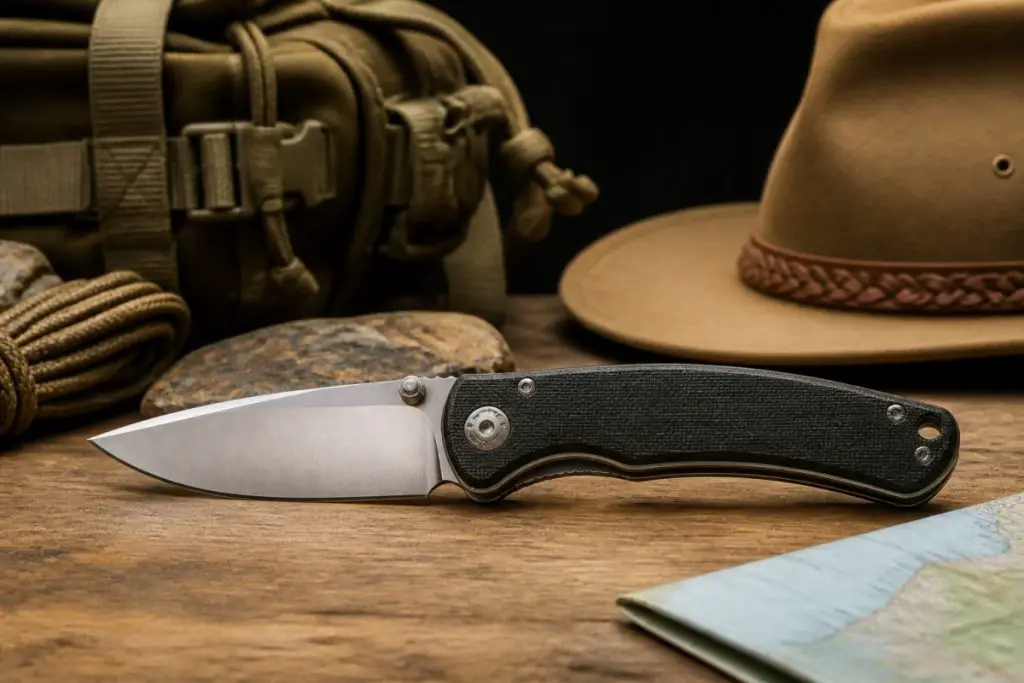

Australia Knife Laws by State and Territory
The quick answer
For outdoor survivalists travelling and working across Australia, rules about possession and carrying of knives vary significantly by state and territory. Broadly: many common folding knives are legal to own, but public carry without a lawful excuse can be an offence, certain designs (automatic, flick or disguised blades) are commonly prohibited, and police have location-specific powers to seize knives and require a lawful excuse. Read the state-by-state breakdown below and use the interactive map to check the law where you’ll be carrying gear.
Context
Australia has a mix of state and territory laws governing weapons; there is no single national knife code. Legislation and police policy focus on intent and context — whether the knife is carried for work, fishing, camping, or for use as an offensive weapon — and many offences hinge on whether you can show a reasonable or lawful excuse. As outdoor survivalists, you’ll most often rely on excuses tied to recreation (bushcraft, camping, fishing), employment (rural work, trades, search and rescue), or transit (transporting tools in secure packaging).
This guide summarises key practical points for each jurisdiction, points to official police and legislation resources, and offers a one-page comparison table for planning trips. Use the interactive map below to jump to a state summary.
Interactive map: click a state or territory to jump to its summary below.
Specs (what we compare)
For each state and territory we cover:
- Reasonable or lawful excuse — how courts and police view excuses like work, fishing, camping or cultural reasons.
- Public carry — when carrying a knife in public is permitted or criminalised.
- Prohibited designs — classes of knives often banned (automatic, flick, gravity, disguised or ballistic knives).
- Work, fishing and camping use — practical expectations and evidence that supports lawful excuse.
- Location-specific police powers — search, seizure and patrol powers at venues, transit hubs and in sensitive locations (schools, courts, alcohol precincts).
Deep-dive analysis
Below is a concise state-by-state comparison. Each entry includes a last-verified stamp and links to the relevant state police and legislation portal for the most current text. Laws change — always check the official pages before you travel or carry gear.
| State / Territory | Reasonable excuse | Public carry | Prohibited designs | Work / fishing / camping | Police powers |
|---|---|---|---|---|---|
| New South Wales Last verified: 17 Sep 2026 |
Work or recreational use generally accepted if clearly connected to activity and demonstrable (tools, permits). | Public carry without reasonable excuse may be an offence; concealment increases risk of charge. | Automatic knives, flick knives and disguised blades commonly restricted. | Gear for camping/fishing should be stored securely and presented if asked; a permit or booking evidence helps. | NSW Police may seize knives and charge for possession in a public place without excuse; checkpoints in transport hubs are common. |
| Victoria Last verified: 17 Sep 2026 |
Work, trade, camping and fishing accepted when credible. Victorian law emphasises intent and context. | Carrying a knife in public without a lawful excuse may be an offence under Victorian law. | Switchblades, automatic knives and certain concealed blades prohibited. | Keep tools in a toolbox or clearly related to activity; proof such as a permit, booking or employer ID reduces risk. | Police have powers to search and seize; local council and event bans may override general permissions. |
| Queensland Last verified: 17 Sep 2026 |
Legitimate work or recreation commonly accepted; the Weapons Act considers both possession and carrying. | Public carrying without excuse can lead to charges; transport in baggage is preferred when uncertain. | Automatic and flick knives, ballistic knives and disguised blades are typically prohibited. | Proof of fishing/camping activity (lines, bait, bookings) is useful; tradespeople benefit from ID and tools in work bags. | Police may issue on-the-spot directions, seize knives and press charges if no lawful excuse is supplied. |
| Western Australia Last verified: 17 Sep 2026 |
WA law recognises lawful carrier excuses; aim to carry tools transparently. | Carrying a knife in public without lawful excuse can be an offence; open carry of work tools is safer. | Automatic knives and some locking mechanisms are curtailed. | Camping and fishing equipment should be contained and clearly identified; tickets or camp permits help support claims. | Local police have search powers; weapons registers and local bans may apply in places like stadiums and airports. |
| South Australia Last verified: 17 Sep 2026 |
SA recognises reasonable excuse such as employment, recreation and cultural activity when evidenced. | Carrying in a public place without a lawful excuse is generally an offence; concealed carry is risky. | Automatic and spring-activated knives are commonly outlawed; some exceptions for trades exist. | Presenting tools in an obvious work context is the practical approach for survivalists and fishers. | Police can seize knives and detain individuals suspected of carrying weapons for offensive use. |
| Tasmania Last verified: 17 Sep 2026 |
Lawful excuse includes employment and recreational bushcraft; documentation is helpful. | Public carry without reasonable excuse is often penalised; transport in luggage recommended for uncertain situations. | Automatic knives and disguised blades are typically prohibited; pocketknives in context are usually tolerated. | Camping and fishing gear should be stored with other equipment; show campground bookings or fishing licences where relevant. | Police may seize knives and issue infringement notices; particular attention at parks and urban centres. |
| Australian Capital Territory Last verified: 17 Sep 2026 |
ACT law stresses lawful excuse and intent; employment and recreation commonly accepted with evidence. | Carrying in public without an acceptable excuse can result in charges; transit through the city requires caution. | Automatic and disguised knives are restricted; folding EDC knives are commonly allowed when contextualised. | Keep tools in your vehicle or pack while travelling; show employer ID, permits or booking confirmations when questioned. | ACT Policing has similar seizure and charge powers as other jurisdictions; secure transport recommended. |
| Northern Territory Last verified: 17 Sep 2026 |
NT recognises reasonable excuses including work and recreation, but laws reflect public safety concerns. | Public carry without a reasonable excuse can be an offence; remote travel often requires clear tools justification. | Automatic, flick, and disguised blades are commonly prohibited. | For remote bushcraft or fishing include evidence like permits, vehicle gear lists or employer confirmation. | Police and park rangers can seize knives and detain people in sensitive areas such as heritage sites. |
Official resources (quick reference)
- NSW Police — legislation gateway: NSW legislation
- Victoria Police — Vic legislation
- Queensland Police — Qld legislation
- WA Police — WA legislation
- SA Police — SA legislation
- Tasmania Police — Tas legislation
- ACT Policing — ACT legislation
- NT Police, Fire & Emergency Services — NT legislation
Utility — practical tips for outdoor survivalists
Use these practical steps to reduce the risk of legal trouble while carrying knives for legitimate outdoor use:
- Secure tools in a dedicated sheath or toolbox while in transit and avoid carrying knives in hand in public places.
- Carry supporting evidence: employer ID, activity permits, campsite bookings, fishing licences, or tour confirmations.
- Aim for transparent use: leave knives visible as tools when safe to do so (e.g., on belt-mounted sheaths during work), and avoid concealed carry when entering urban precincts, schools, or events.
- Avoid designs commonly prohibited in most jurisdictions (automatic switches, ballistic mechanisms, disguised blades).
- When unsure, call the local police non-emergency number or check the state police website before travel.
When a lawful excuse may not be enough
A lawful excuse reduces risk but is not an absolute defence. Police assess behaviour, location and context. Aggressive behaviour, intoxication, or proximity to sensitive locations (courts, schools, licensed premises) can still result in seizure or charges even if you claim a lawful excuse.
Local SEO references
For route planning or trip posts targeted to Australian readers, reference state police pages, local council rules for parks and campgrounds, and state legislation portals listed above. Local searchers often query “knife rules
Alternatives (safer ways to carry cutting tools)
Consider alternatives that reduce legal friction and still meet survival needs:
- Multi-tools with non-locking blades and clear tool purposes — generally easier to justify at checkpoints.
- Fixed-blade knives carried only at campsite or in vehicle stowed in a kit, not on the person in urban public places.
- Compact bushcraft kits stored in vehicle or pack with evidence of planned activity (map, permit, booking).
- Use of legally-compliant folding knives without automatic opening mechanisms; avoid novelty or disguised knives.
Verdict
Australia knife laws are state-based and emphasise context, intent and evidence. For outdoor survivalists, the safest approach is:
- Choose simple, non-prohibited designs (manual folding or fixed-blade tools appropriate to the task).
- Carry knives in a way that visibly connects them to lawful activity — in a sheath, tool-roll, or with supporting documentation.
- Check the local state police and legislation portal before travel. If you expect to cross state borders, research each jurisdiction you’ll pass through.
Planning, transparency and simple evidence (booking confirmation, permit, employer ID) will usually avoid problems. When in doubt, store blades securely in luggage or vehicle and carry minimal tools when moving through urban areas.
FAQs
Can I carry a pocket knife for camping in Australia?
Yes — in most states a pocket knife carried for genuine camping or bushcraft is tolerated when you can show evidence of the activity (camp booking, fishing licence, map). However, public carry without a lawful excuse is an offence in many jurisdictions, so keep the knife stored while travelling through towns and be ready to show supporting documents if asked.
Are folding knives legal across every Australian state?
Folding knives are commonly legal to own, but carrying them in public without a lawful excuse can still attract penalties depending on state law. Designs that automatically open or are disguised may be prohibited. Check the specific state or territory police guidance before carrying.
What counts as a reasonable or lawful excuse?
Typical lawful excuses include employment duties (trades, rangers, rescue), recreational activities (camping, fishing), cultural practices and transit between a place of work and home. The critical factor is the credibility and immediacy of the excuse — carrying gear clearly linked to the activity and having documentation strengthens your position.
Which designs are most often prohibited?
Across Australian jurisdictions the most commonly restricted designs include automatic (spring-assisted or switchblade) knives, flick/opening knives with assisted mechanisms that open at the push of a button, ballistic knives and blades disguised as other objects. If you rely on a knife for outdoor tasks, opt for a simple manual folding or fixed blade.
Who do I contact if I think a police decision about my knife was incorrect?
If you believe a seizure or charge was incorrect, ask for the officer’s details and the incident reference, and seek legal advice promptly. You can also request a review through local police complaint channels or contact us with corrections to this guide using our reader correction form (link below).
How often is this guide updated?
Each jurisdiction entry carries a last-verified date. Laws and policy change; always confirm on the official police or legislation portal before travel. Our last verification for this page was 17 Sep 2026 — reach out via our correction form if you find a discrepancy.
More resources and reader corrections
For full site archives and posts, or to report corrections to this guide, use these resources:
Final reminder: this guide is informational, not legal advice. If you’re carrying tools for work or survival, plan before you travel — choose simple non-prohibited designs, carry them transparently, and keep evidence of your activity ready. Safe travels and responsible carrying.