
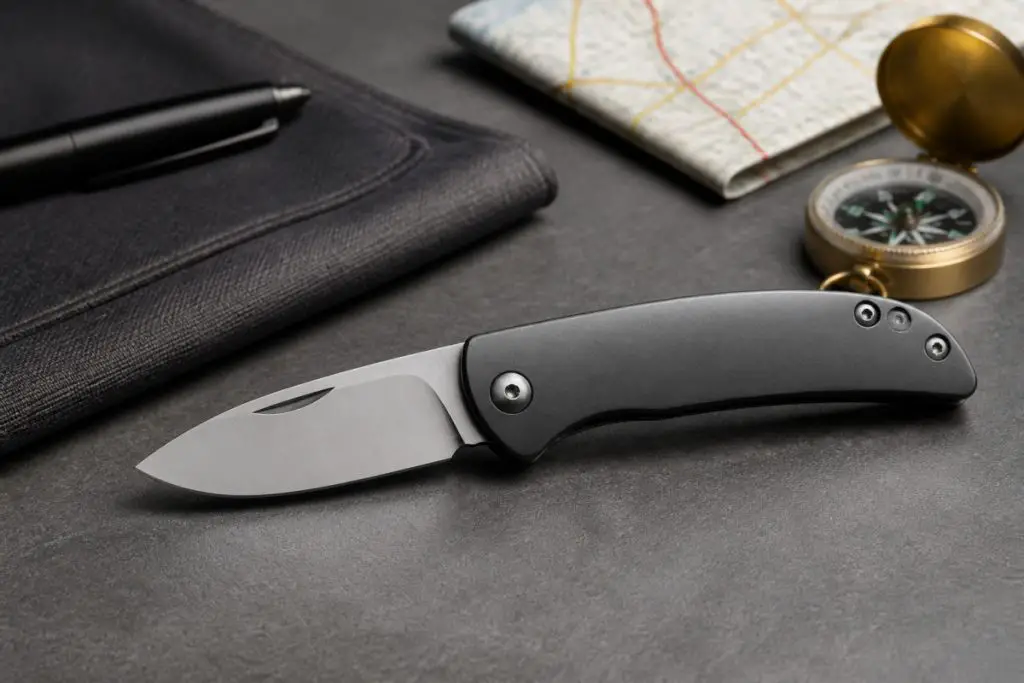

Germany Knife Laws: Carry Rules for Travelers
The quick answer
Short version for EDC fans: German knife laws are governed by the Weapons Act (Waffengesetz, WaffG). Sections 42, 42a and 42b set the rules for carrying and prohibitions in public (Tragen in der Öffentlichkeit). Folding EDC without a locking mechanism and small utility knives are generally tolerated; one-hand opening locking knives (Einhandmesser mit Verriegelung) and some fixed blades can be restricted or banned in public places. When in doubt, transport blades in a locked container or checked luggage and consult the official legal text before you travel.
Read the legal text for each section here:
WaffG §42,
WaffG §42a,
WaffG §42b.
Context
If you carry an everyday carry (EDC) folder while traveling in Germany, you are interacting with federal law, local police (Polizei), and venue-specific rules (events, stadiums, public transport). The keyword for this article — Germany knife laws — covers those interactions. This guide explains what Sections 42–42b of the German Weapons Act cover, what kinds of knives are commonly controlled (including one-hand locking knives and fixed blades), and practical steps for travelers, commuters and EDC enthusiasts.
Important terms (bilingual):
- Waffengesetz (WaffG) — Weapons Act
- Tragen in der Öffentlichkeit — Carrying in public
- Einhandmesser — One-hand knife / one-handed opening knife
- Verriegelung — Locking mechanism
- Verschlossener Behälter — Locked container
- Ordnungsamt — Local municipal enforcement office
Specs
For clarity, here is a compact breakdown of the core regulatory areas covered by §§ 42–42b WaffG:
| Section | What it covers (plain language) | How it affects EDC |
|---|---|---|
| § 42 | General rules on carrying weapons in public (Tragverbot) | Defines the baseline for what “carrying” means and where prohibitions apply |
| § 42a | List and description of weapons whose carrying is prohibited (Verbotsliste) | Often interpreted to include some knives (automatic, switchblades, certain one-hand locking knives); consult the text |
| § 42b | Authority for additional local/event-specific bans and enforcement (Gefahrengebiete, Events) | Allows states, cities, and event organizers to set further limits (e.g., stadiums, demonstrations) |
Read the official texts: §42, §42a, §42b.
Deep-dive analysis
How Sections 42, 42a and 42b interact
In practice:
- § 42 sets the general prohibition on carrying weapons in public unless a legal exception applies (for example, transport related to work, hunting, or legitimate sporting use).
- § 42a enumerates items explicitly prohibited from public carry or subject to particular restrictions (this is where specifics about categories such as switchblades, butterfly knives, and other weapons appear).
- § 42b permits additional measures by authorities and organizers to enforce prohibitions at specific locations, during events, or within defined zones (e.g., arenas, festivals, demonstrations).
One-hand locking knives (Einhandmesser mit Verriegelung)
One-hand opening knives that lock open can be controversial in Germany. Some knives that open with one hand and lock are treated like “spring-assisted” or “automatic” knives in enforcement practice, depending on blade action and design. Whether a particular model is allowed for carry can depend on interpretation under §42a and on local enforcement.
Practical takeaway: carry discretion. A compact slip-joint or non-locking folder with a manual two-hand opening operation will be less likely to draw attention than a one-handed lockable flipper or an assisted-opening tactical folder.
Fixed-blade limits
Fixed blades (feststehende Messer) are treated more strictly in many contexts, because they cannot be folded away. Whether a fixed blade is lawful to carry in public depends on the circumstances, the blade’s characteristics, and the specific prohibitions listed in §42a. Fixed blades are commonly transported in a locked container or in checked luggage when moving between locations.
Events, public transport and locked-container transport
Events: Organizers and venues rely on §42b and their own house rules to ban knives entirely. Stadiums, concert venues, and large festivals typically ban all knives, razor blades and other potential weapons. The organizer’s rules can be enforced by security or the Polizei; local ordinances (Ordnungsverfügungen) may also apply.
Public transport: Deutsche Bahn (DB), municipal transport (S-Bahn, U-Bahn, Straßenbahn) and local transit authorities set carriage rules and may ban knives on carriers and platforms. Even if something is not explicitly covered by federal law, you can be refused boarding or removed for safety reasons.
Locked-container transport (verschlossener Behälter): The safest way to carry a knife when traveling through airports, train stations or across municipal boundaries is in a locked container or checked luggage. For non-air travel, store blades out of immediate reach (e.g., locked suitcase, secured toolbox) and keep documentation of lawful purpose (e.g., work ID for a tradesperson).
Utility
Practical rules-of-thumb for travelers and daily EDC (everyday carry) enthusiasts:
- Before you travel, read the exact wording of §42, §42a and §42b (links above). Official text is definitive.
- If your knife opens one-handed and locks, treat it as potentially restricted. Consider carrying a non-locking slip-joint when sightseeing or riding transit.
- For fixed blades, only transport in a locked container or checked luggage unless you can clearly show a legitimate, lawful reason (work, sport, hunting) and meet any regional requirements.
- At events and in stadiums, assume a blanket ban unless the organizer tells you otherwise in writing. Security rules can be strict and inconsistently enforced across Bundesländer.
- If questioned by Polizei or Ordnungsamt, stay cooperative, show ID, and avoid demonstrative behavior. If you think a misunderstanding occurred, document the interaction and ask for an official record (Dienstliche Feststellung).
Local references you might find useful while in Germany:
- Bundespolizei (federal police) — for railway and airport enforcement
- Polizei NRW, Polizei Berlin, Polizei Bayern — for state-specific questions and local contact points
- Ordnungsamt — municipal office that handles local public order rules
Quick site resources on knifepulse:
posts sitemap,
products sitemap.
Alternatives
If you want functionality but prefer lower enforcement risk while traveling in Germany, consider these alternatives:
- Non-locking slip-joint folders — simple, practical, and less likely to be treated as a weapon in a casual check.
- EDC multi-tools with enclosed blades — often seen as tools rather than weapons, though local rules still apply.
- Compact cutting tools that do not present as a blade (safety box cutters with retractable blades) for work-related needs and transit.
- Keep favorite folders in checked luggage (if flying) or in a locked bag during high-risk situations (events, protests, stadiums).
2024–2026 change timeline
Laws and enforcement priorities evolve. Below is a practical, evidence-aware timeline summarizing the legislative and enforcement context affecting knives in Germany from 2024 through 2026. This timeline points you to what to watch for; confirm changes on the official federal site.
- 2024 — Continued emphasis on clarifying which knife types count as “weapons” under §42a. Regional police guidance and public campaigns highlighted airport/train-station security. Travelers saw stricter venue enforcement in larger cities.
- 2025 — Several Bundesländer published local clarifications and enforcement priorities. Expect more event-specific bans under §42b and clearer municipal rules from Ordnungsämter. Employers and trades organizations released guidance on transport for work knives.
- 2026 — Ongoing reviews at federal and state levels; technology and product design (assisted openers, lock types) prompted discussion about classification criteria. Travelers should check the most recent wording at the official legislative site (Gesetze im Internet) before trips, and review local transport authority pages for DB and municipal transit systems.
Note: This timeline highlights practical administrative trends; always consult the current WaffG texts for exact legal changes.
Verdict
For EDC fans traveling in Germany, the best strategy is conservative: prefer non-locking or small folders for everyday carry, use locked containers for fixed blades, and respect event and transport operator rules. Sections 42, 42a and 42b of the Weapons Act create a framework that leaves room for interpretation and local enforcement, so proactive caution reduces the risk of confiscation or fines.
The official legal texts are the final authority: §42, §42a, §42b.
Not legal advice
This post is informational only and does not constitute legal advice. Laws change and enforcement varies by location and circumstance. If you need a legally binding interpretation or face legal action, consult a qualified attorney in Germany (Rechtsanwalt) or contact the local Polizei / Ordnungsamt for guidance.
FAQs
Can I carry a one-hand opening folding knife in public?
It depends. One-hand opening knives with a locking mechanism can be treated as restricted under §42a of the WaffG in some contexts. A conservative approach is to avoid carrying one-hand lockable knives in crowded public places and on public transport; choose a non-locking slip-joint for low-risk carry.
Are fixed blades allowed?
Fixed blades are more strictly viewed because they cannot be folded away. Transporting fixed blades openly in public can lead to enforcement action unless you have a clearly lawful purpose. When traveling, store fixed blades in a locked container or checked luggage.
Do stadiums and festivals allow knives?
Most large venues and event organizers ban knives and other potential weapons as a condition of entry. Even if a knife is lawful under federal law, organisers can prohibit them under §42b and venue house rules.
If you found this guide useful, explore more posts and product info on knifepulse: site posts and product listings.
Keywords: Germany knife laws, WaffG, Einhandmesser.