
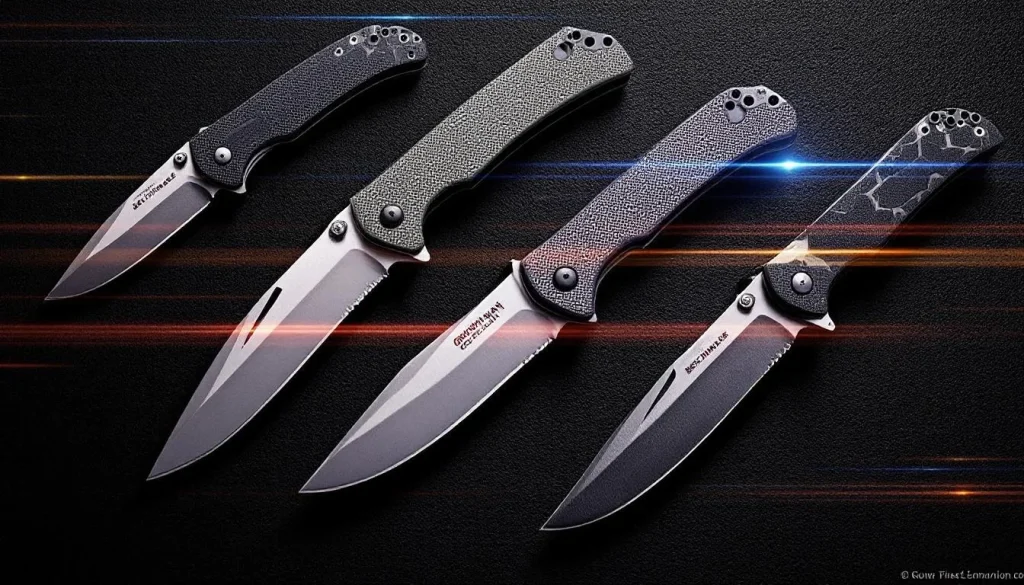

The Griptilian is one of the most versatile folding knives on the market, but choosing the right variant depends entirely on how it fits your hand. A Benchmake Griptilian comparison reveals significant differences in handle length, blade steel, and overall ergonomics that directly impact comfort and performance.
Whether you carry daily, hunt occasionally, or need a reliable backup blade, the variant you select should match your grip style and intended use. This guide walks you through each model’s strengths so you can make a confident choice.
Benchmade Griptilian Models Overview
Size and Weight: Full-Size vs. Mini
The Griptilian family splits into two primary categories: full-size models weighing around 108–110 grams with an 8.8 cm blade, and mini variants that run roughly 15 percent smaller with a 7.4 cm blade. This size difference matters far more than it sounds. Full-size Griptilians suit users with medium to large hands or those who prioritize cutting reach and leverage, while minis work better for smaller hands, lighter everyday carry, or situations where discretion matters.
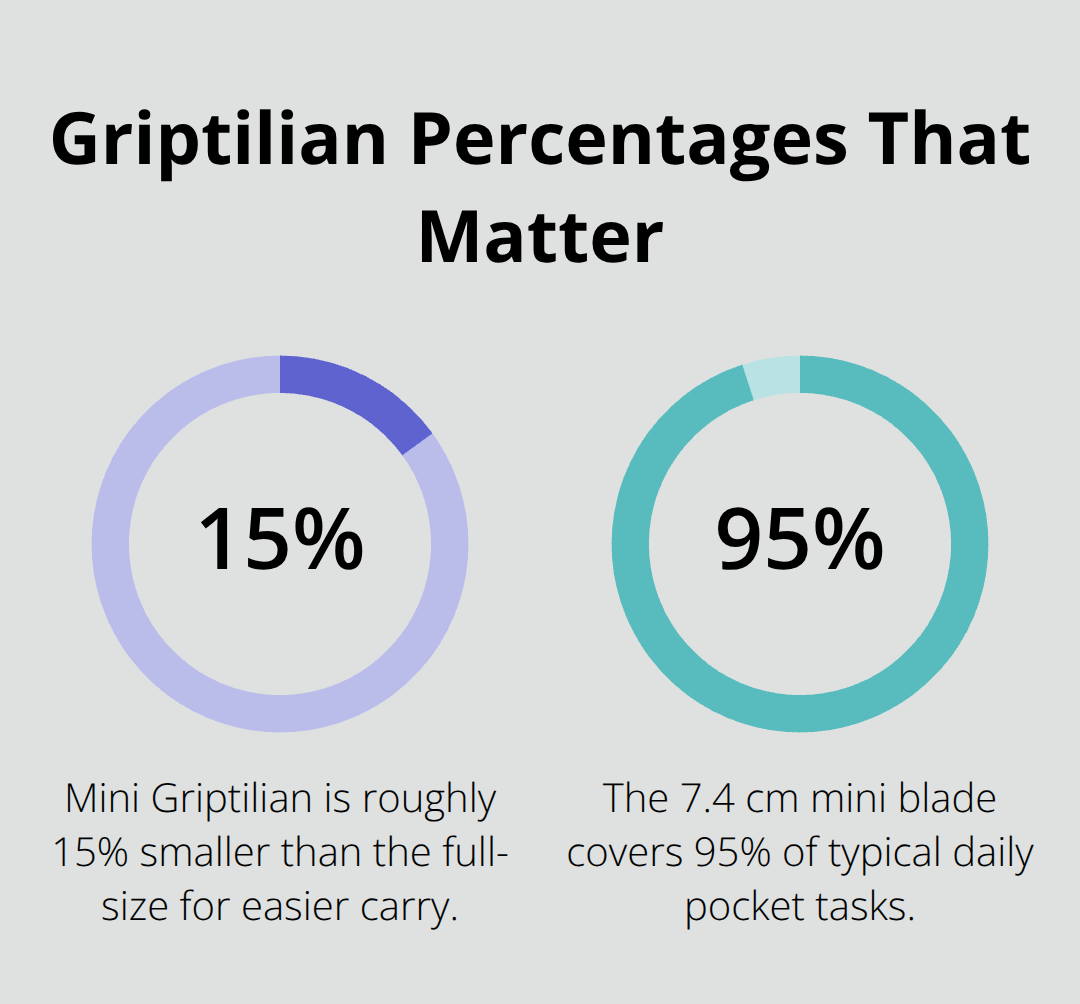
The weight savings alone-roughly 15–20 grams difference-changes how the knife sits in a pocket or pack over an eight-hour workday.
Blade Steel Performance and Maintenance
Benchmade shifted the base model from 154CM to S30V, a move that improves edge retention and corrosion resistance but demands more effort to sharpen. S30V holds an edge longer during repetitive cutting tasks, which justifies the roughly five-dollar price jump for most users. However, some knife owners still prefer 154CM specifically because it sharpens faster with basic stones and costs less if you plan to use the knife hard without babying it. The 20CV mini option represents the premium choice, delivering superior edge retention in a compact package-ideal if you want the smallest knife that still outperforms on cutting performance.
Handle Materials and Tactile Feel
Standard Griptilians use Noryl GTX, a reinforced plastic that feels utilitarian and produces a distinctive clack when you open and close the knife. Noryl GTX resists water absorption and chemicals like automotive oils, making it genuinely practical for wet environments or workshop use. Premium variants step up to G10 scales, which provide noticeably better grip texture, reduce that plastic-like sound, and feel more refined in hand. The trade-off is price-G10 versions cost more and add marginal weight.
Blade Shapes and Edge Configurations
Blade shape options include modified drop point, sheepsfoot, and tanto configurations, each available in plain edge or partially serrated versions. Drop point excels for general cutting and everyday tasks, sheepsfoot works best for detail work and slicing, and tanto provides a reinforced tip for tougher materials.
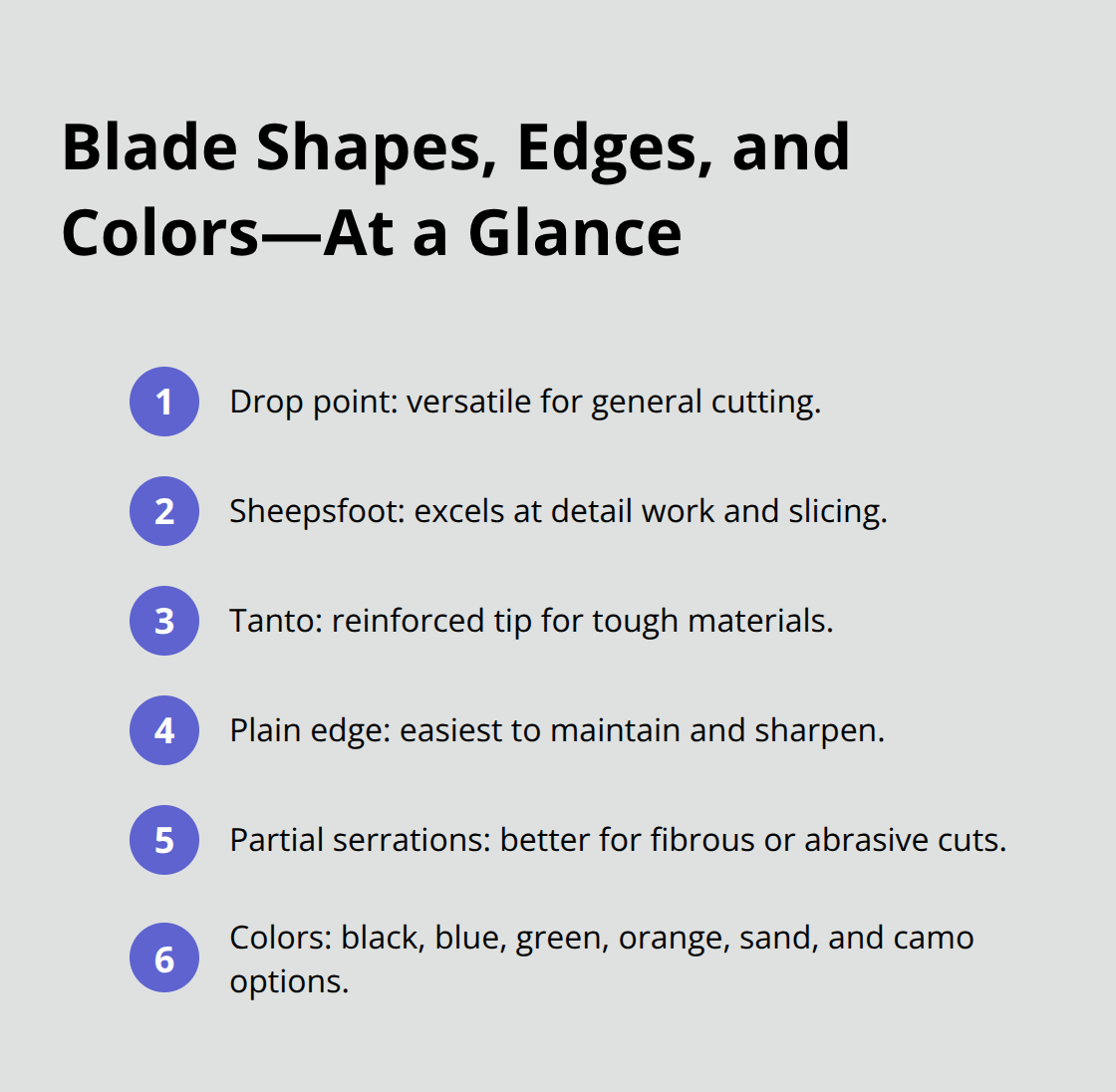
Plain edge requires less maintenance and sharpens easily, while partial serrations handle tougher cutting without the maintenance burden of full serrations. Color customization spans black, blue, green, orange, sand, and camo patterns, which allows you to match your knife to your carry environment-muted colors for tactical or professional settings, brighter options for outdoor work where visibility helps locate a dropped knife.
The AXIS Lock and Lightweight Design
The core AXIS lock remains unchanged across all variants, delivering smooth one-handed deployment and strong blade retention that outperforms traditional lockbacks. Griptilian models consistently weigh less than competitors offering similar blade length, a direct result of Grivory handles paired with stainless steel liners rather than full metal construction. This lightweight design does not sacrifice durability; users routinely report heavy-duty field performance without handle failure. The geometry and ergonomics stayed largely intact across the lineup’s evolution, meaning the original 2001 design proved so sound that Benchmade refined materials rather than reimagine the knife. Understanding these core differences sets the stage for matching a specific variant to your hand size, cutting style, and maintenance preferences-the focus of the next section.
Grip Styles and Hand Fit Analysis
Full-Size vs. Mini: Finding Your Hand’s Match
Hand size creates the most immediate friction point when choosing between full-size and mini Griptilians, yet most buyers underestimate how dramatically this affects daily usability. A full-size Griptilian with its 8.8 cm blade and standard handle length works genuinely well for anyone wearing a size Large glove or larger-the handle sits naturally in your palm without requiring you to choke up or adjust your grip mid-cut. Users with medium hands often find themselves in the uncomfortable middle ground where the full-size feels slightly long for precision work but the mini feels slightly short for leverage-intensive tasks like food prep or processing firewood.
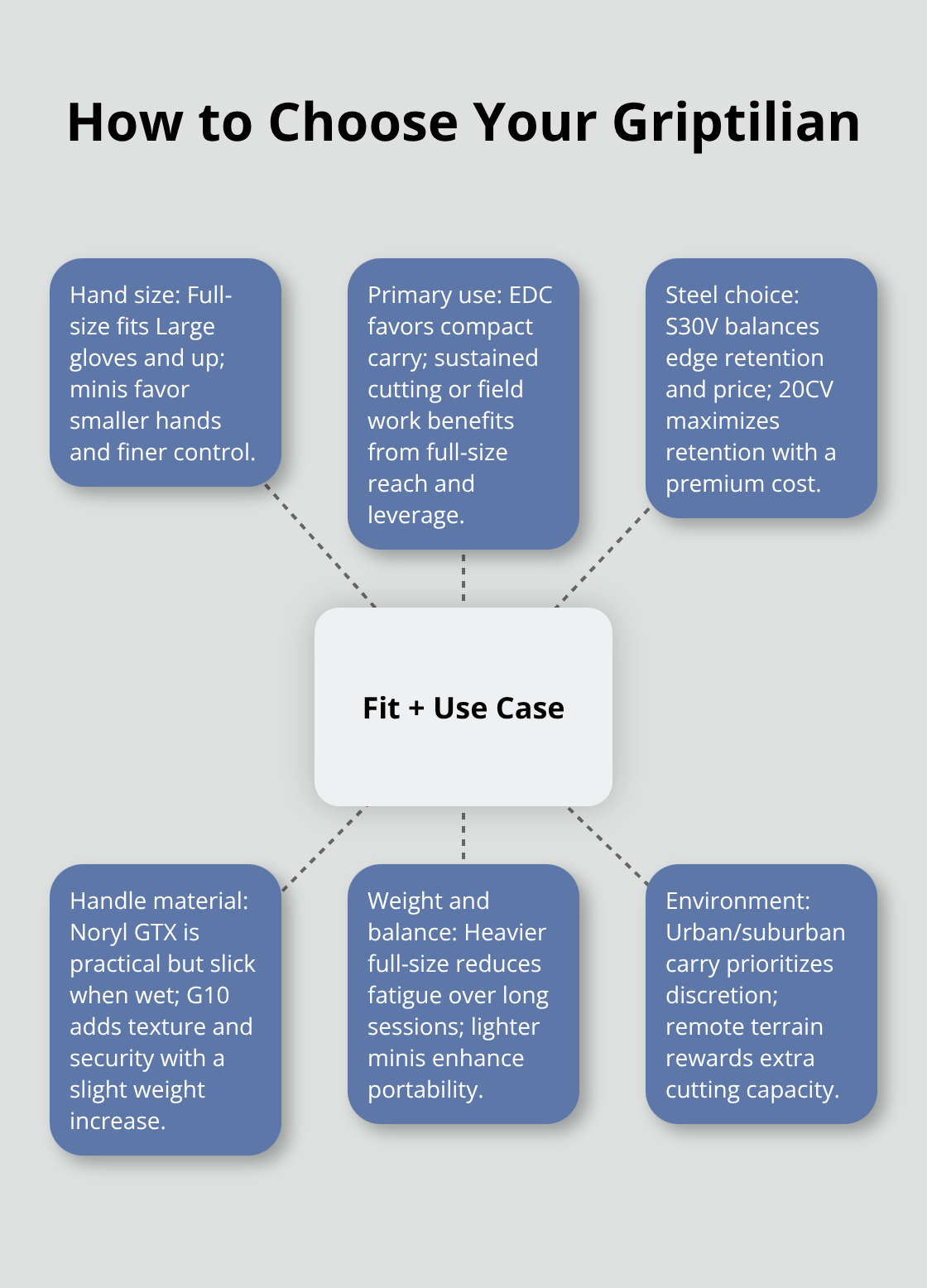
Generally, the handle length should be slightly longer than your hand width measurement to ensure a comfortable grip. Small-handed users who force themselves into a full-size model develop hand fatigue faster because they unconsciously tension their grip to compensate for the longer handle, a problem that compounds over eight-hour workdays or multi-day trips.
Handle Material and Wet-Condition Performance
The Noryl GTX handle on standard models reveals another grip reality that separates theory from field performance: the material’s low friction in wet conditions actually works against you if your hands sweat or if you work in rain or near water. The plastic texture slides slightly under pressure, forcing you to grip harder to maintain control-exactly the opposite of what you want during repetitive cutting. Users who hunt in humid climates or fish regularly report switching to G10 scales specifically because that rougher texture provides genuine security without excessive hand tension. Extended use over three to four hours exposes this weakness; your forearm fatigues noticeably faster with slippery Noryl GTX than with textured G10 or aftermarket grip tape modifications.
Weight Distribution and Cutting Efficiency
The Griptilian’s lightweight design-one of its signature strengths-becomes a liability during extended cutting tasks because the reduced mass means you do more of the work yourself rather than letting the knife’s weight assist the blade through materials. Full-size models at 108–110 grams cut noticeably more efficiently than minis at 85–90 grams when you process tougher materials; the 20–25 gram difference translates directly to less hand fatigue during sustained cutting. If you plan to use your Griptilian for serious food prep, processing game, or similar extended cutting work, the full-size model with G10 scales becomes the logical choice despite the cost increase, because the ergonomic advantages directly reduce the physical demand on your hands and forearms over time. These performance differences set the stage for matching your specific needs-everyday carry demands differ significantly from tactical applications or outdoor work, which we’ll explore next.
Choosing the Right Variant for Your Needs
Everyday Carry: Size and Steel Matter
Everyday carry demands differ fundamentally from tactical applications or extended outdoor work, yet many buyers treat all Griptilian variants as interchangeable. Your actual use determines which model prevents frustration and delivers genuine value. If you carry a knife primarily for occasional cutting tasks-opening packages, light food prep, or backup utility-the mini Griptilian with S30V becomes the smarter choice. The 7.4 cm blade handles 95 percent of daily pocket tasks without the bulk, and the compact handle fits comfortably in a jacket or jeans pocket without creating an obvious bulge or printing through fabric. S30V holds an edge extremely well with heavy daily use, with how long between sharpening depending on how sharp you like to keep your knives. Cost matters here too: the mini S30V model runs roughly $105, making it accessible while avoiding the premium price of 20CV variants.
Food Prep and Field Cutting Work
If your daily carry involves food preparation, processing game in the field, or sustained cutting work, the full-size Griptilian with G10 scales and S30V steel becomes non-negotiable. The 8.8 cm blade cuts noticeably more efficiently through tougher materials-the extra 1.4 centimeters of blade length translates to measurably better leverage, and the 20–25 gram weight difference reduces hand fatigue during three-hour or longer cutting sessions. Real field experience confirms this: hunters who process game regularly report that the full-size model cuts through joints and sinew with substantially less physical effort than the mini, directly reducing forearm strain on long days. G10 scales on the full-size version cost more upfront, but the improved grip security during wet conditions and extended use justifies the investment if you cut in rain, near water, or with wet hands. The price premium-roughly $130–140 for full-size G10 variants-pays for itself through reduced grip tension and faster work.
Tactical Carry and High-Stress Environments
Tactical applications introduce a different calculus entirely. Law enforcement, security professionals, and serious outdoors enthusiasts operating in high-risk environments require instant blade deployment and reliable performance under stress. The full-size Griptilian with the AXIS lock enables one-handed opening that works reliably even with gloved hands or during adrenaline situations when fine motor control deteriorates. The blade length of 8.8 cm provides adequate reach for defensive scenarios without crossing into territory that complicates carry legality across different jurisdictions. S30V steel is the correct choice for tactical carry because edge retention matters when you cannot resharpen in the field-the knife must perform reliably through multiple cutting tasks without degradation. If budget allows, the 20CV mini option deserves serious consideration for tactical carry because it delivers superior edge retention in a package that remains concealable and reduces weight fatigue during extended operations.
Environment-Specific Selection
Portability and functionality balance differently based on environment: desert or mountain environments where you control your gear favor the full-size model because the extra cutting capacity matters when you cannot resupply, while urban or suburban tactical carry prioritizes the mini to maintain discretion and reduce profile. The Griptilian’s lightweight design-a strength for everyday carry-becomes less critical in tactical contexts where reliability matters far more than shaving 20 grams, yet the minimal weight never hurts when you operate for extended periods.
Customization and Steel Commitment
Users who plan serious customization through Benchmade’s Collective program should select their base model carefully because upgrading blade steel after purchase is impossible, but handle materials can be modified. This means committing to S30V or 20CV before purchase, not after testing, which argues for renting or borrowing a friend’s Griptilian in your intended size before committing money.
Final Thoughts
The Benchmade Griptilian comparison ultimately comes down to matching your hand size, cutting demands, and environment to the right variant. Full-size models deliver superior cutting efficiency and leverage for sustained work, while minis excel at discretion and everyday pocket carry without bulk. Your choice between S30V and 20CV steel reflects how much edge retention matters against sharpening convenience and cost, while handle material-whether Noryl GTX or G10-directly impacts grip security during wet conditions or extended use.
Start by honestly assessing your primary use case. If you carry daily for light tasks and value portability, the mini S30V model delivers genuine value without compromise. If you process food regularly, hunt, or work in environments demanding sustained cutting performance, the full-size G10 variant justifies its higher price through measurable reductions in hand fatigue and grip tension. Test a friend’s Griptilian in your intended size and steel configuration before committing money, spending at least an hour cutting under conditions matching your actual use.
Visit a local dealer and handle multiple variants side by side; the tactile difference between Noryl GTX and G10 becomes immediately obvious, and you’ll discover whether the full-size handle feels natural or oversized in your palm. Your Griptilian should feel like an extension of your hand, not a tool you constantly adjust or compensate for. Once you’ve tested and confirmed your choice, you’ll carry a knife that performs reliably for years while fitting your grip perfectly.