
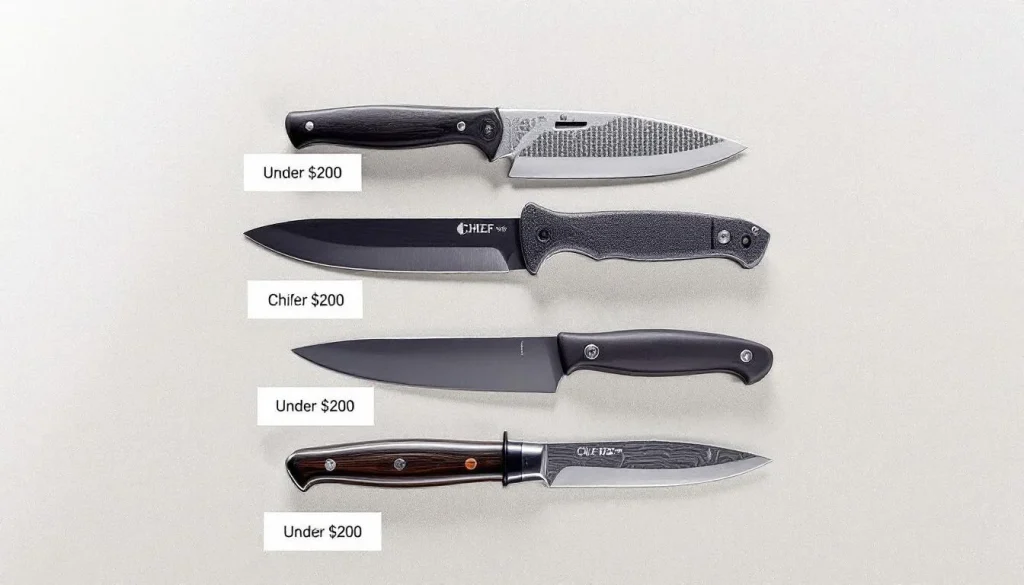

Finding a reliable hunting knife shouldn’t drain your wallet. Quality blades under two hundred dollars deliver real performance in the field without compromise on steel, edge retention, or durability.
This guide cuts through the noise to show you which knives actually work, what separates smart buys from false economy, and how to match the right blade to your hunting style and needs.
What Separates Budget Knives That Work From Those That Don’t
Steel Quality Reveals True Character
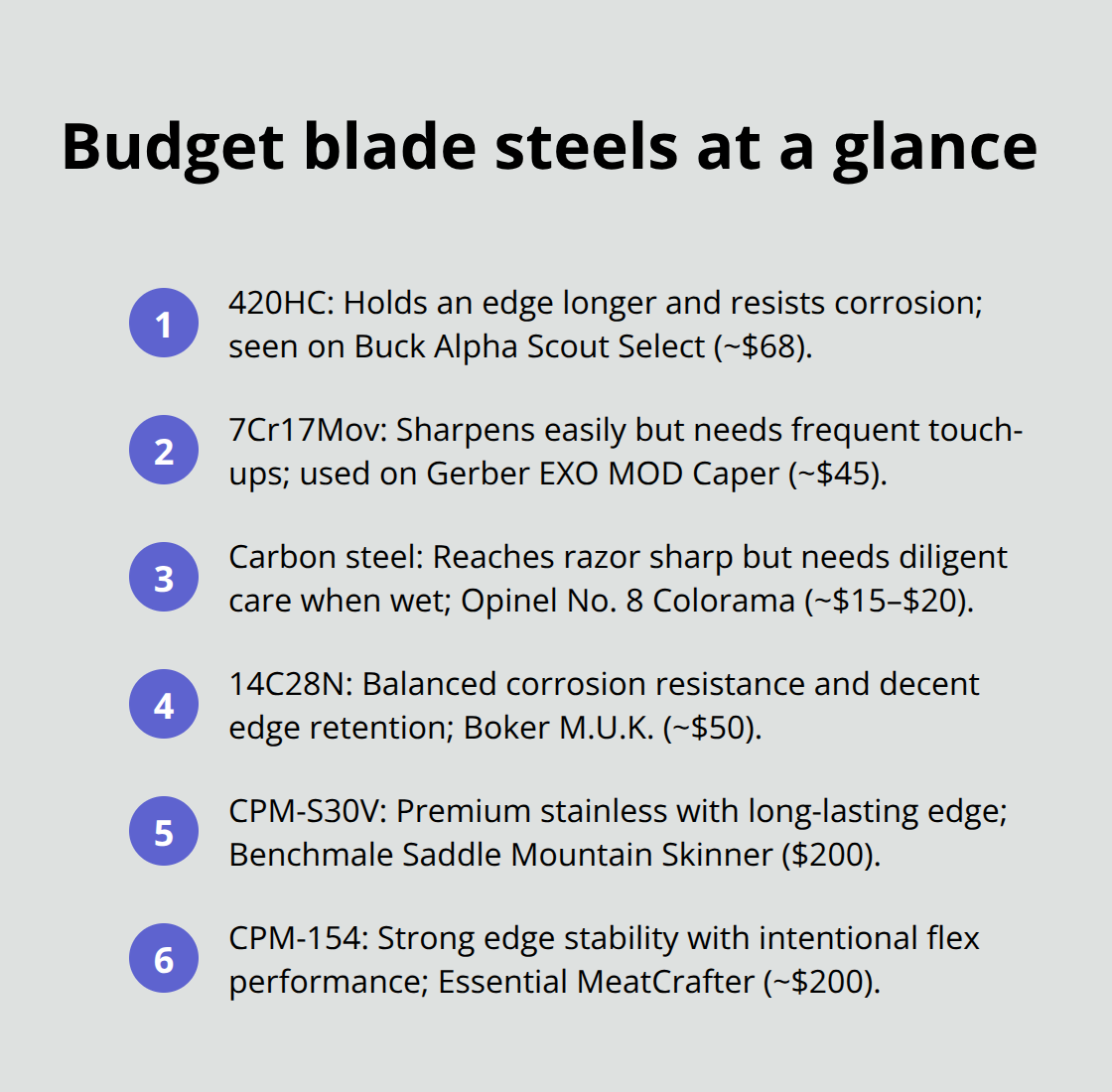
Steel choice exposes which budget knives deliver real performance and which cut corners. The difference between 420HC stainless and 7Cr17Mov shows up in how long your edge lasts between sharpenings. 420HC, found in knives like the Buck Alpha Scout Select around $68, holds an edge longer than basic 420J2 and resists corrosion without demanding obsessive maintenance. 7Cr17Mov, used in the Gerber EXO MOD Caper priced near $45, sharpens easily and suits hunters who don’t mind frequent touch-ups. Carbon steel like that in the Opinel No. 8 Colorama around $15 to $20 reaches razor-sharp and stays that way, but it requires more attention in wet conditions. The practical choice depends on your tolerance for sharpening: if you sharpen monthly, 7Cr17Mov works fine; if you hunt hard for weeks, 420HC or better saves frustration. Stainless variants like 14C28N in the Boker M.U.K. at $50 split the difference with solid corrosion resistance and decent edge retention, making it a smart middle ground for field dressing in variable weather.
Blade Shape Determines Task Performance
Blade geometry controls which tasks feel easy and which feel like you’re fighting the knife. A skinning knife needs belly-that curve from handle to tip that lets you make controlled, sweeping cuts without pressing hard. The Boker M.U.K. with its 2.4-inch curved blade excels at separating hide from meat because the belly does the work; the Dexter Boning Knife with its 7-inch straight edge handles backstrap work and precise cuts around bone joints where belly would interfere. Drop-point blades like those on the Benchmale Saddle Mountain Skinner at $200 and the Essential MeatCrafter around $200 balance tip control with usable edge length, making them reliable for multiple field tasks. Flex matters too: the Essential MeatCrafter’s 6-inch blade has intentional flex that absorbs pressure when you work around bone, reducing the chance of slipping and cutting yourself. A rigid blade like the Havalon Piranta Edge at $55 with replaceable blades works best for skinning where you want zero deflection and maximum precision. Try selecting based on your primary task, not on what looks impressive.
Handle Security and Maintenance Demands
A knife handle must stay secure in your grip when wet and bloody-this separates field-ready knives from those that fail when you need them most. G10 scales grip better than smooth wood, though wood handles on classics like the Saddle Mountain Skinner offer superior feel and tradition. The Gerber EXO MOD Caper’s handle feels slippery when wet, a real liability in the field despite its light weight. Ergonomics matter most during the third hour of field work when fatigue sets in; the Buck Alpha Scout Select’s praised ergonomics mean your hand doesn’t cramp, while sharp corners on the Boker M.U.K. grip can become uncomfortable on longer sessions. Maintenance requirements vary sharply: stainless steel knives need basic wiping and occasional oiling, carbon steel demands immediate rinsing after use and drying, and replaceable-blade systems like the Havalon eliminate sharpening entirely but cost more per blade over time. A Morakniv Basic 511 at $10 comes sharp and resharpens easily on any stone, making it the lowest-friction option for budget-conscious hunters who don’t mind frequent maintenance. Match your knife’s maintenance demands to your actual habits-if you won’t sharpen regularly, pay extra for edge-retention steel or choose replaceable-blade designs.
With steel, blade shape, and maintenance expectations now clear, you can evaluate which specific models fit your hunting style and field conditions.
The Best Fixed Blades and Folders Under Two Hundred
Fixed Blades Dominate Field Dressing Tasks
Fixed blades outperform folders for field dressing because they handle bone work, precise cuts around joints, and sustained pressure without flex or failure. The Benchmale Saddle Mountain Skinner at $200 uses CPM-S30V steel that holds an edge through multiple animals without sharpening, weighs 4.3 ounces, and features a 4.2-inch drop-point blade with wood grips that secure your hand even when wet with blood and fat.
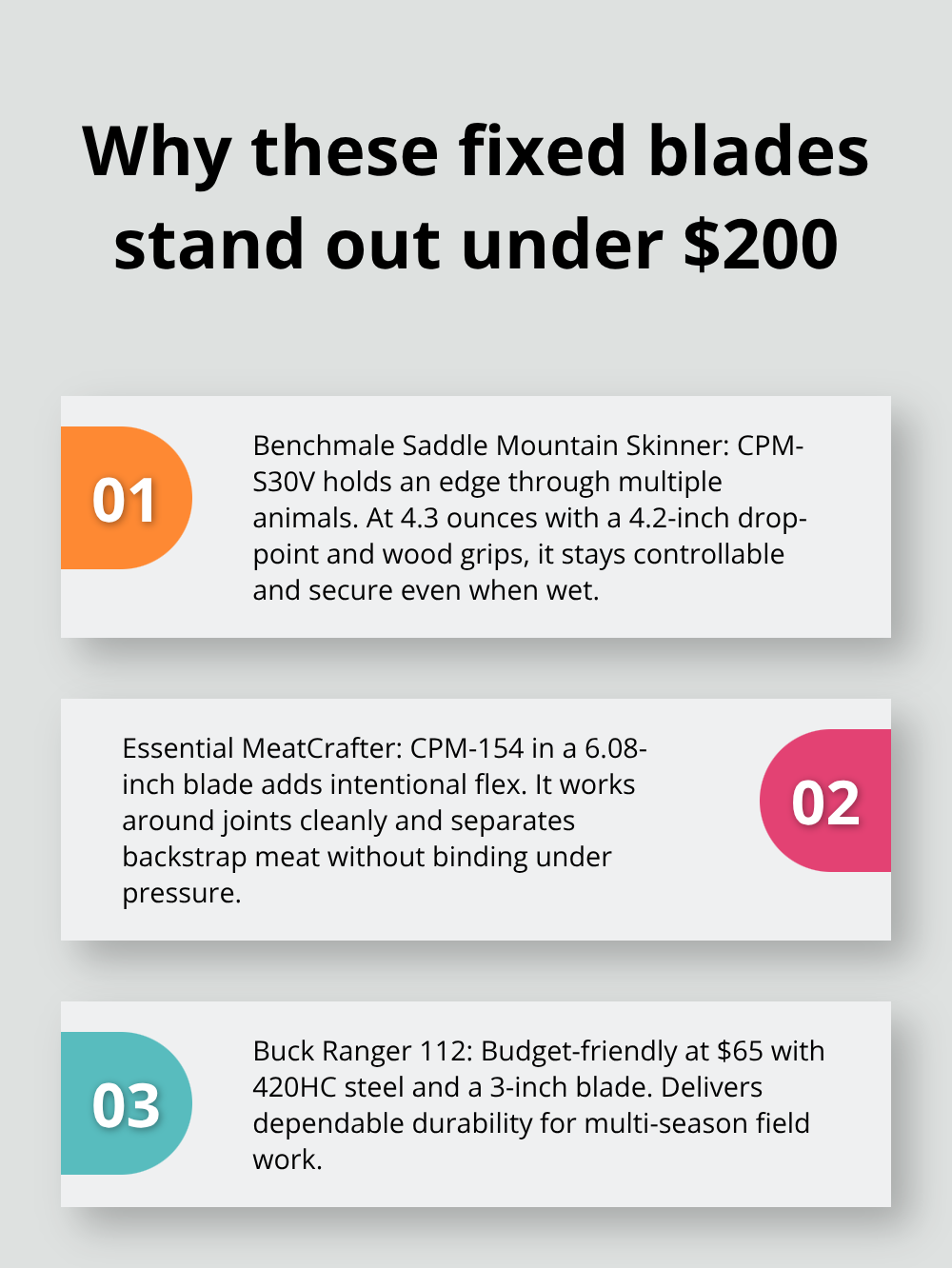
The Essential MeatCrafter around $200 takes a different approach with a 6.08-inch blade in CPM-154 that flexes intentionally, letting you work around bone joints and separate backstrap meat with surgical precision without the blade binding. For hunters on tighter budgets, the Buck Ranger 112 at $65 delivers solid performance with 420HC steel, a 3-inch blade, and enough durability for consistent field work across multiple seasons.
Budget-Friendly Fixed Blade Options
The Morakniv Basic 511 Orange costs just $10 and arrives sharp enough to skin without stropping, though its carbon steel demands immediate rinsing after use to prevent rust. If replaceable blades appeal to you, the Havalon Piranta Edge at $55 provides twelve fresh blades for razor-sharp skinning work without sharpening downtime, though swapping blades in cold conditions takes practice and you’ll spend more per blade over time than maintaining a quality fixed edge.
Folding Knives for Portability and Secondary Tasks
Folding knives sacrifice some durability for portability and work best when you’re carrying light or need a secondary blade for lighter tasks like food prep or camp work. The Buck Alpha Scout Select at $68 offers excellent ergonomics with a 2.875-inch blade in 420HC steel that won’t embarrass you in the field, though hunters note the sheath as a weak point compared to the larger Alpha Hunter model. The Boker M.U.K. at $50 features a 2.4-inch belly blade perfect for skinning with a pocket clip for front-carry, solid sheath, and 14C28N steel that resists corrosion without demanding obsessive maintenance, though the grip’s sharp corners become uncomfortable during extended use.
Lightweight Folders for All-Day Hunts
The Gerber EXO MOD Caper at $45 weighs just 1.75 ounces with a 3.25-inch blade in 7Cr17Mov steel, making it excellent for reducing fatigue on all-day hunts, but the slippery handle demands careful grip control when working with blood and fat. Most hunters benefit most from pairing a small 2.4 to 3.5-inch folder for general camp tasks with a quality fixed blade for actual field dressing, rather than forcing one knife to handle everything. Your next step involves matching these options to your specific hunting style and field conditions.
Matching Your Knife to How You Actually Hunt
Align Your Blade to Your Primary Task
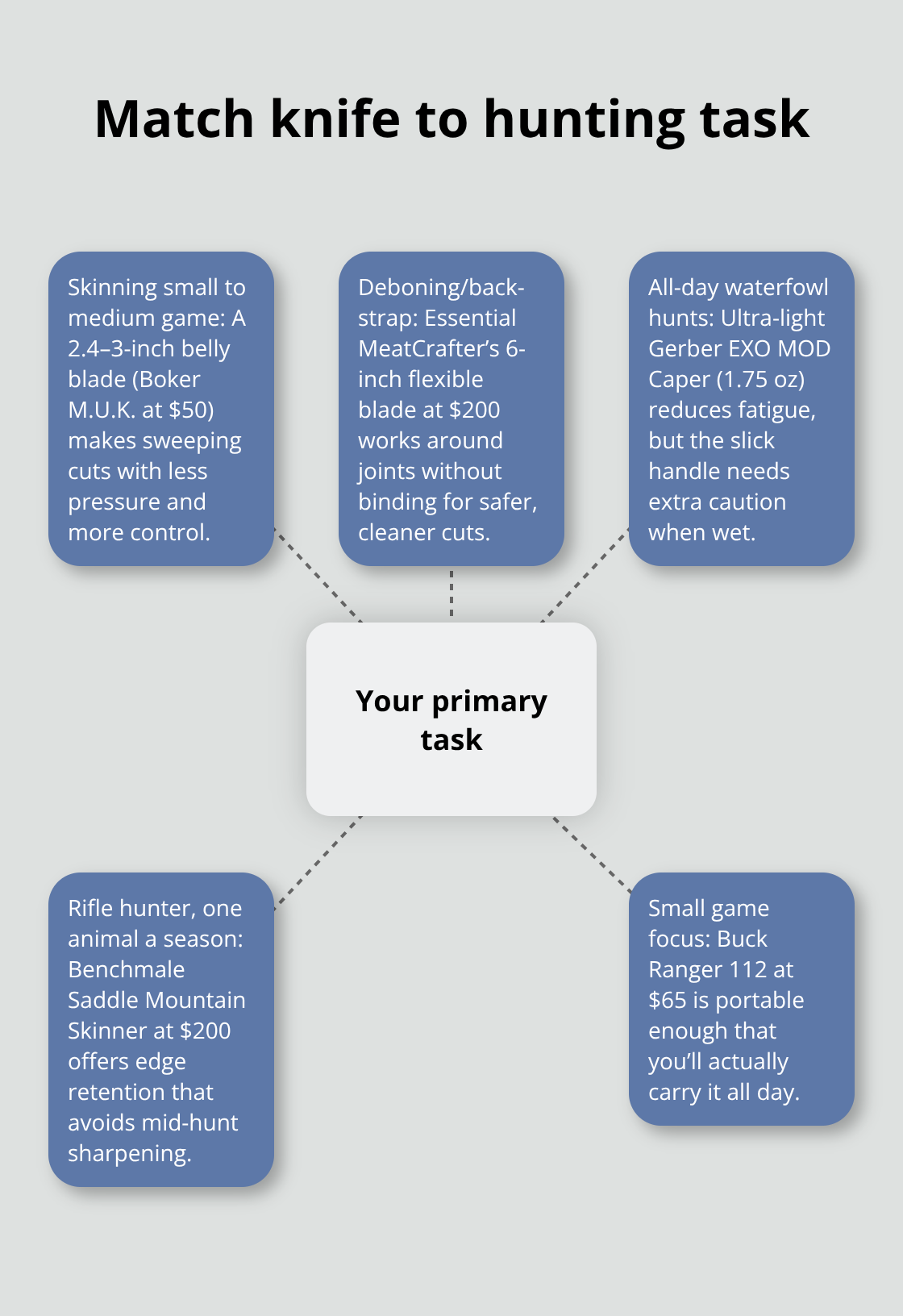
The knife that works perfectly for one hunter can feel wrong in another’s hand because hunting styles vary dramatically. A upland bird hunter processing dozens of small game over a weekend needs something entirely different from a rifle hunter field dressing one elk per season. Start by naming your primary task: if you skin, a 2.4 to 3-inch blade with belly curve like the Boker M.U.K. at $50 outperforms a longer straight edge because the curve does the work without requiring pressure. If you debone backstrap and process meat at camp, the Essential MeatCrafter’s 6-inch flexible blade at $200 lets you work around joints without the blade binding, while a shorter knife forces you to reposition constantly and increases slip risk. Waterfowl hunters who pack knives in waders and boat gear benefit from ultra-light folders like the Gerber EXO MOD Caper at 1.75 ounces because fatigue compounds over twelve hours of hunting, but that same knife’s slippery handle becomes dangerous when wet, so pair it with a textured secondary blade.
Choose Based on Hunt Frequency and Investment
Rifle hunters who dress one animal annually can invest in a premium fixed blade like the Benchmale Saddle Mountain Skinner at $200 with CPM-S30V steel because the cost per use stays low and edge retention means you won’t sharpen mid-hunt. Small game hunters need portability above all else, making the Buck Ranger 112 at $65 a smarter choice than heavier alternatives because you’ll actually carry it instead of leaving it in the truck. Weight and maintenance tolerance separate knives you’ll use from those gathering dust. A 4.3-ounce fixed blade feels negligible on a short hunt but becomes noticeable by hour six of walking rough terrain, while a 1.75-ounce folder disappears entirely from your pack.
Balance Weight Against Maintenance Reality
However, the lightest option isn’t always best: the Havalon Piranta Edge at $55 trades weight for replaceable blades, meaning you’ll spend roughly $2 per blade swap in the field instead of maintaining one edge through the season. Carbon steel knives like the Opinel No. 8 at $15 to $20 weigh almost nothing and arrive razor-sharp, but they demand rinsing and drying after every use or rust develops quickly, a hassle that breaks discipline when you’re tired after long days. Stainless steel knives like the Buck Alpha Scout Select at $68 with 420HC require only basic wiping and occasional oiling, fitting hunters who won’t maintain blades obsessively.
Match Steel Type to Your Sharpening Habits
If you sharpen monthly without complaint, 7Cr17Mov steel in the Gerber EXO MOD Caper at $45 works fine because frequent touch-ups offset lower edge retention. If you sharpen once per season, spend the extra $20 for 420HC or better because you’ll hunt frustration-free when the edge holds longer between sharpenings. Hunters in wet climates benefit most from stainless steel or replaceable-blade systems that resist corrosion without constant attention, while dry-climate hunters can choose carbon steel or lower-grade stainless without worry. Your actual maintenance habits matter more than theoretical performance: a $200 knife with premium steel abandoned in a damp garage deteriorates faster than a $50 stainless option you maintain regularly.
Final Thoughts
Budget hunting knives under two hundred dollars deliver genuine field performance when you match steel quality, blade shape, and maintenance demands to your actual hunting style. A rifle hunter field dressing one elk annually benefits most from investing in a fixed blade like the Benchmale Saddle Mountain Skinner at $200, where CPM-S30V steel holds an edge through multiple animals without sharpening, while a small game hunter processing dozens of birds needs portability and quick blade changes, making the Havalon Piranta Edge at $55 with replaceable blades the smarter choice. Upland hunters who carry knives all day benefit from lightweight folders like the Gerber EXO MOD Caper at $45, while camp processors who work around bone joints need the Essential MeatCrafter’s flexible 6-inch blade at $200 to avoid binding and slipping.
Steel type and maintenance reality separate knives you’ll actually use from those gathering dust in your gear closet. If you sharpen monthly without complaint, 7Cr17Mov works fine, but if you sharpen once per season, spend extra for 420HC or better to hunt frustration-free. Stainless steel knives like the Buck Alpha Scout Select at $68 demand only basic wiping, fitting hunters who won’t maintain blades obsessively, while carbon steel options like the Opinel No. 8 at $15 arrive razor-sharp but require immediate rinsing after use.
Identify your primary task and maintenance tolerance, then select from the models that match those criteria. Test your chosen knife on actual game before committing to it as your primary blade, and visit our knife buying guide for additional resources and expert recommendations. The right budget knife becomes an extension of your hand in the field-reliable, comfortable, and ready when you need it most.