
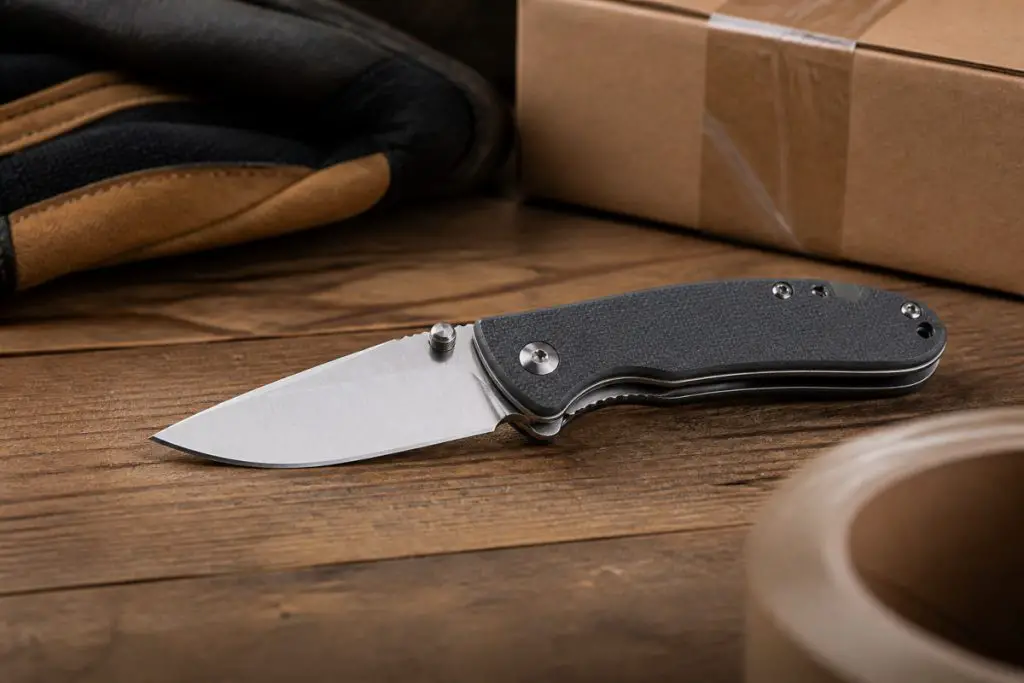

Best Knives and Cutters for Warehouse Work
Practical EDC choices for carton, tape, strapping and shrink-wrap tasks in U.S. warehouses — focused on blade exposure, glove use, quick replacement and policy compliance.
The quick answer
If you need a concise pick: for general-purpose EDC and quick access, the Milwaukee Fastback 6 in 1 is the best blend of a folding utility and knife for everyday warehouse tasks; for low-exposure, safety-first cutting the Slice 10514 Mini Box Cutter is the top safety cutter; and for an ultra-light EDC folder that tucks in a pocket the Gerber EAB Lite is a strong secondary choice. These three represent the most practical combination when evaluating carton, tape, strapping and shrink-wrap work while considering blade exposure, glove compatibility, fast replacement and common U.S. workplace safety policies. If you searched for the best knife for warehouse work, these are the tools to test first in your specific facility’s safety plan.
Context
Warehouse cutting tasks are repetitive and fast-paced. Cartons, reinforced tape, steel/plastic strapping and shrink-wrap each demand different blade behavior: penetration, controlled slicing, or scraping. In the United States, most employers follow OSHA guidance and internal safety policies that favor tools minimizing open blade exposure and enabling one-handed operation while wearing gloves. Many companies maintain a list of permitted cutters or require safety-approved tools, so check your site policy before selecting an EDC tool.
This review focuses on three commonly available tools that appear on many warehouse floors and in EDC pockets: Milwaukee Fastback 6 in 1 (a hybrid folder/utility), Gerber EAB Lite (minimalist folding utility blade), and Slice 10514 Mini Box Cutter (a low-exposure safety cutter). We evaluate them through real-world tasks and through metrics important to daily EDC gear enthusiasts: blade exposure, glove friendliness, replacement speed and consumable cost.
For broader research or to cross-check other posts and product lists on this site, see related sitemaps: https://knifepulse.com/post-type-post-sitemap-1.xml, https://knifepulse.com/post-type-product-sitemap-1.xml and https://knifepulse.com/taxonomy-type-category-sitemap-1.xml.
Specs
| Model | Blade type & length | Blade exposure | Replacement | Typical retail |
|---|---|---|---|---|
| Milwaukee Fastback 6 in 1 | Utility-style blade / 2–3″ (folding) | Standard folding blade; moderate exposure when open | Replaceable standard utility blades; quick-change via blade storage | $15–$25 |
| Gerber EAB Lite | Small folding utility blade / ~1.5″ | Folding blade; moderate exposure when open | Uses disposable utility blades; compact replacement | $12–$20 |
| Slice 10514 Mini Box Cutter | Ceramic safety blade / ~0.5″ | Low exposure; blade recessed when not cutting | Ceramic blade cartridges — lower frequency but different cost | $8–$15 |
Deep-dive analysis
How we judged performance
We assessed each tool across the common warehouse cutting tasks: opening cartons, slicing tape, cutting plastic strapping, and trimming shrink-wrap. For each task we rated: effectiveness (how well the blade completes the task), safety (blade exposure and accidental-cut risk), glove compatibility (common nitrile and cut-resistant glove performance), replacement speed (how fast you can change a dull blade during a shift) and compliance risk (how likely the tool is to be barred under typical U.S. workplace policies).
Task matrix
| Task / Tool | Milwaukee Fastback | Gerber EAB Lite | Slice 10514 |
|---|---|---|---|
| Carton opening | Very good — long blade and folding design for leverage | Good — compact; better for small boxes | Good for tape-only openings; less effective for heavy corrugated |
| Tape slicing | Excellent — utility blade slices reinforced tape cleanly | Good — small blade but adequate | Excellent — designed to slice tape safely without deep penetration |
| Strapping (plastic) | Good — can cut light plastic strapping; requires care | Fair — small blade can struggle with thick straps | Not ideal — short ceramic blade not suited for heavy straps |
| Shrink-wrap trimming | Good — controlled slices with longer blade | Good — nimble for detailed cuts | Good — works well for thin film and tape layers |
| Blade exposure risk | Moderate — folding open exposes typical knife blade | Moderate — compact but still an exposed edge when open | Low — recessed ceramic design minimizes open edge |
| Glove friendliness | High — works well with nitrile and light cut-resistant gloves | High — small handle but accessible with gloves | High — one-handed operation while gloved |
| Quick blade replacement | Fast — utility blades are common and quick to change | Fast — uses standard disposable blades | Moderate — ceramic cartridges last longer but replacement needs a spare cartridge |
| Policy risk (typical U.S. warehouse) | Medium — may be allowed but some firms restrict folding knives | Medium — small knives sometimes restricted | Low — designed for safety compliance and often permitted |
Blade exposure and glove use
Blade exposure is the single biggest determinant of whether a tool is allowed on a warehouse floor. The Slice 10514 keeps the cutting edge recessed and is therefore least likely to create policy conflict. The Milwaukee and Gerber are folding knives or folders using standard utility-style blades — they expose the edge when deployed and so require clear permission in some facilities. In practice, most U.S. distribution centers will allow folding utility-style tools if they are dedicated to work, not carried as weapons, and are on an approved equipment list.
Glove compatibility: all three tools work with typical nitrile gloves; if you’re wearing thicker cut-resistant gloves (level A3–A5), the longer Milwaukee blade offers more control. Safety cutters like the Slice are designed to be used with gloves and reduce the chance of slicing through the glove into skin, which is why they are popular in regulated facilities.
Quick replacement and consumables
Speed of blade swap matters on high-volume shifts. Standard utility blades (Milwaukee, Gerber) are inexpensive, widely stocked, and can be changed in seconds if you carry spares. Ceramic cartridges for Slice last longer between replacements but when they do need swapping, you typically replace the whole cartridge, which takes slightly longer and requires carrying special cartridges rather than single blades.
Utility — real shift recommendations
How to choose by job
- Pick a safety cutter (Slice) if your site forbids exposed blades or you do mostly tape and bag cutting.
- Pick a utility folder (Milwaukee) if you need multi-task versatility: carton opening, heavier shrink-wrap and occasional strapping.
- Pick a minimalist folder (Gerber EAB Lite) if you want a lightweight pocket knife for occasional opening and low-profile carry.
Consumable-blade cost calculator
Use this simple calculator to estimate consumable cost for blades over time. Replace variables with your usage.
Formula:
Monthly cost = (Blades used per day × Workdays per month) × Cost per blade
Example assumptions:
| Tool | Blades per pack | Pack price (USD) | Cost per blade | Blades used/day (example) | Monthly cost (22 days) |
|---|---|---|---|---|---|
| Milwaukee / standard utility | 10 | $6 | $0.60 | 1 | $0.60 × 22 = $13.20 |
| Gerber EAB Lite (standard blades) | 10 | $6 | $0.60 | 0.5 | $0.60 × 11 = $6.60 |
| Slice 10514 (ceramic cartridges) | 3 cartridges | $12 | $4.00 | 0.2 | $4.00 × (0.2 × 22) = $17.60 |
Notes: ceramic cartridges cost more per unit but often last longer; adjust blades used per day to reflect your actual workload. For many pick-and-pack roles, standard utility blades are the lowest per-cut cost. If your employer requires safety cutters, factor that into permitted tool costs.
Workplace safety policies — practical tips
- Always confirm approved tools with your manager or safety officer before carrying a folder-style knife.
- Keep spare blades and a small replacement kit in a designated work pouch rather than loose in a pocket.
- When swapping blades, use a flat, stable surface and follow the tool manufacturer’s recommended replacement steps — do not improvise.
- Report damaged or broken cutters to supervision immediately; many facilities require tagging and disposal protocols.
Alternatives
If the three models reviewed aren’t right for you, consider these categories:
- Retractable blade box cutters — offer adjustable blade length and are common in warehouses for controlled exposure.
- Electric strap cutters — for high-volume strapping work, these reduce manual force and the chance of slip injuries (check charging and maintenance rules).
- Fixed-blade safety knives with protected tips — very common for conveyor-line work where speed and low exposure are priorities.
When selecting alternatives, prioritize readily replaceable consumables and tools explicitly listed as permitted in your facility’s safety documentation.
Verdict
Summing up for daily EDC gear enthusiasts in the United States: if you want one everyday tool that handles the widest range of warehouse tasks — carton, tape, moderate strapping and shrink-wrap — the Milwaukee Fastback 6 in 1 is the most practical utility-folder choice for an EDC pocket. If your priority is compliance and minimizing blade exposure, the Slice 10514 Mini Box Cutter is the best safety cutter. The Gerber EAB Lite is the compact EDC backup for users who favor minimal carry and pocket comfort.
Picking the best knife for warehouse work depends on your employer’s rules and the tasks you perform most often. Folding utility blades like the Milwaukee and Gerber score higher for versatility and consumable cost; safety cutters like the Slice score higher for workplace approval and reduced incident risk. Carry a tool that matches both your workload and your facility’s safety policy.
FAQs
Can I carry a folding knife in a U.S. warehouse?
That depends on your employer’s policies. Many U.S. warehouses allow folding utility knives designated for work tasks, but some facilities restrict exposed blades. Always confirm with your supervisor or safety officer and follow the facility’s permitted-tool list.
How often should I replace utility blades in a high-volume shift?
Replace blades when they no longer cut cleanly or when they require more force than normal. For high-volume work, this can be daily or every few days. The consumable-blade cost calculator above helps estimate cost based on your usage.
Are ceramic safety blades better than steel for warehouses?
Ceramic blades like those in the Slice cutter can be safer because they are often recessed and less likely to create a deep-cut injury; they also resist corrosion and last a long time on tape and film. However, they cost more per cartridge and are less suited for thick strapping or heavy corrugated. Your choice should depend on the kinds of materials you cut most and your workplace rules.
Which tool has the lowest long-term consumable cost?
Standard steel utility blades (used by Milwaukee and Gerber) generally have the lowest per-blade cost. Ceramic cartridges cost more per unit but may last longer per cutting task; check the calculator above with your real usage to determine which is cheaper for you.