
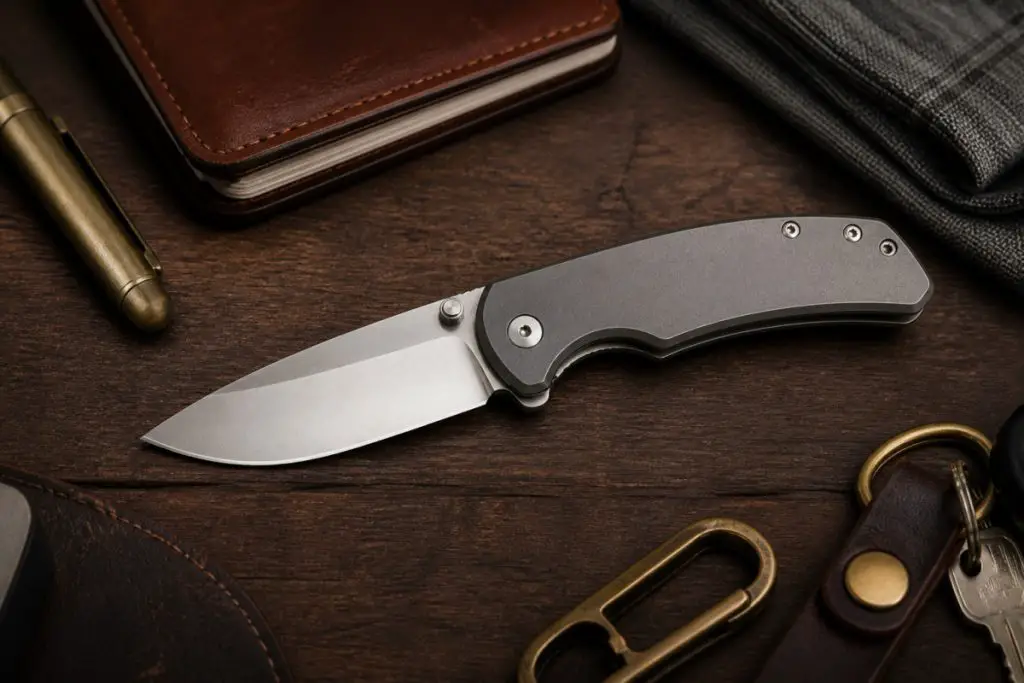

California Knife Laws: Carry Rules in 2026
The quick answer
Short version for everyday carry enthusiasts: most common folding knives that open with one hand and do not have a permanently fixed blade are generally legal to own and carry in public in California, but the state bans or restricts certain types of knives (dirks/daggers and many switchblades), and local jurisdictions can layer additional rules or enforcement. Read the rest of this guide before you carry: size, locking mechanisms, how the knife is carried (concealed vs. open), and the place where you carry it all matter.
Context
This guide is written for EDC (everyday carry) folding-knife users in the United States who live in or travel through California. It explains how state-level statutes apply to common categories (folders, fixed blades, automatic/switchblades), clarifies concealed vs. open carry, and highlights restricted places and notable city-level enforcement differences for Los Angeles and San Francisco.
Note: this article summarizes legal themes and commonly enforced rules. It is informational, not legal advice. Laws change. See the last-verified date below and use the correction form if you find an error.
Specs — what categories matter for California knife laws
For practical carry decisions, classify knives by these attributes:
- Folder vs. Fixed blade — folding knives store the blade in the handle; fixed blades are always exposed when carried.
- Locking vs. slip joint — a locking folder that locks open can be treated differently by law-enforcement and courts than a non-locking slip-joint.
- Manual vs. automatic (switchblade/assisted) — automatic opening mechanisms are often treated as a separate restricted class.
- Concealment — carrying a blade concealed on the person can trigger different statutes than openly carrying it.
- Place-based restrictions — schools, courthouses, transit, airports, stadiums, and private property with posted prohibitions.
Deep-dive analysis
Below is a practical breakdown of how common carry scenarios are typically treated under California state law, followed by a scenario table with official code citations to give you a starting point for research and conversations with local authorities.
Folding knives
Folding knives are the backbone of EDC. In California, simple non-locking folders and many locking folders are commonly carried without incident. Enforcement risks increase if a folding knife has a locking mechanism and is carried concealed and ready for immediate use — that can be argued as a weapon under certain circumstances. When interacting with law enforcement, explain ownership and everyday utility, and avoid brandishing or carrying in restricted spaces.
Fixed blades
Fixed blades (neck knives, boot knives, full tangs) are more visible as weapons and are treated more cautiously by police. Open-carry of a fixed blade in a sheath in public areas draws attention and can lead to detention or arrest depending on context and local ordinances. If you rely on a fixed blade for lawful outdoor work, have documentation and keep it sheathed and stored when not in use.
Switchblades and automatic knives
Automatic-opening knives, commonly called switchblades, are subject to explicit restrictions under California law. Different mechanisms (button, out-the-side, gravity) may be regulated differently; some assisted-open designs sit in a gray area. Because enforcement is strict for automatic knives, EDC enthusiasts commonly avoid them in California or verify their status before carrying.
Concealed carry vs open carry
How a knife is carried (concealed in a pocket vs. clipped and visible) matters. Concealed carry of certain types (dirks/daggers, some switchblades) is clearly unlawful under state statute; even legal knives carried concealed can cause issues during police encounters. For routine public carry, a conservative approach is: keep blades sheathed or clipped, avoid “tactical” presentation, and respect posted prohibitions.
Restricted places
Federal locations (airports, federal courthouses), K–12 schools, university campuses (campus police rules vary), stadiums, and public transit systems frequently have no-knife policies or ban specific knives. Private property owners and business operators may also post signs prohibiting weapons; those directives are enforceable as trespass if you refuse to comply.
Scenario table (state rules with official code citations)
The table below summarizes common real-world scenarios for California knife carry and points you to the primary state statutes commonly used in enforcement. Use these code citations as references for further reading with official state resources.
| Scenario | Typical State Rule | Official code citation (for research) |
|---|---|---|
| Carrying a small folding knife (non-locking), clipped in pocket | Generally lawful in public; enforcement depends on behavior and location | See California statutes on weapons and “dangerous weapons” definitions; commonly referenced: California Penal Code § 21310 |
| Carrying a locking folder concealed on the person | Often lawful, but may be questioned if used or presented aggressively; context matters | See California Penal Code provisions regarding concealed weapons and definitions (e.g., statutes applied in dirk/dagger cases) |
| Openly carrying a fixed blade in public | Allowed in many places but can result in detention or arrest depending on local laws and perceived threat | State law + local ordinances; enforcement varies by jurisdiction |
| Possession of a switchblade/automatic knife | Restricted—possession, sale, or carry can be unlawful depending on mechanism and blade length | Commonly enforced under California Penal Code provisions addressing automatic knives and “dangerous” instruments |
| Carrying any knife in school or federal building | Prohibited; strict penalties and zero-tolerance policies apply | Education Code and federal statutes alongside state penal code provisions |
Note: the table uses commonly cited penal-code references and topic headings for research. If a specific statute number is critical to you, check the California Legislative Information site or consult an attorney. This article provides a practical, user-focused summary rather than exhaustive statutory text.
Local cautions: Los Angeles and San Francisco warnings
Two cities where EDC owners should be particularly cautious:
- Los Angeles — Los Angeles has city and county enforcement patterns that can include sting operations and sweeps addressing violent crime. Officers in L.A. are likely to take a proactive approach if a knife appears tactical, is carried concealed, or is displayed during a traffic stop. If stopped, comply, stay calm, and state the knife is for everyday utility; however, do not reach for it without explicit instruction from an officer.
- San Francisco — San Francisco and agencies that operate in the Bay Area, including some transit systems, have stringent policies. Public transit authorities (MUNI, BART) enforce weapons prohibitions strictly. San Francisco also enforces peer city ordinances that restrict sale and possession of certain automatic knives and large fixed blades.
Local law enforcement discretion matters—avoid carrying anything that might appear military or tactical when you plan to move through downtown areas, transit hubs, or large public events.
Utility — practical carry tips for EDC users
Use these practical steps to reduce encounters and legal risk while staying prepared:
- Choose a conservative EDC: small folding knife with a plain edge and slip joint or simple lockback minimizes issues.
- Avoid visible knuckle-style handles, aggressive finishes, or decorative serrations that read as combat tools.
- Know restricted areas before you go: airports (TSA rules apply), federal facilities, schools, and private businesses may ban knives.
- When stopped by police, be transparent: inform the officer you have a knife, where it is, and ask before moving to retrieve it.
- Carry documentation of lawful purpose when applicable (work credentials, utility paperwork) if your carry is job-related.
- Store knives safely and out of reach in vehicles. Vehicle carry can trigger different rules depending on whether a knife is concealed, accessible, or intended for use.
Alternatives
If you are worried about California knife laws or plan to travel through multiple jurisdictions in the U.S., consider these alternatives:
- Carry a multi-tool with a small non-locking blade—many jurisdictions consider multi-tools more acceptable than tactical folders.
- Use a non-locking slip-joint folder under 3″ blade for city carry—less likely to be treated as a weapon.
- For outdoor or work tasks where a fixed blade is necessary, keep the fixed blade in checked gear or locked storage when passing through urban areas.
- Learn local ordinances for cities you frequent (some municipalities have very specific prohibitions) and avoid gray-area automatic knives.
Verdict
California is not a blanket ban state for common folding knives, but it does restrict certain classes of knives and relies on local enforcement discretion. For daily EDC, favor a conservative folding knife that emphasizes utility over aggressive looks or automatic features. Always be aware of the place-based rules that apply to your route and venues.
If you need a reliable reference while traveling in the state, keep a short summary note on your phone and know how to behave during police encounters. When in doubt, store the knife and avoid escalation.
FAQs
- Are pocketknives legal in California?
- Many pocketknives are legal to possess and carry, particularly simple non-locking folders. Restrictions increase for locking folders, fixed blades, and switchblades. Location and behavior matter. If you carry one, keep it for lawful everyday tasks and avoid carrying in restricted places.
- Can I carry a switchblade in California?
- Switchblades and other automatic-opening mechanisms are commonly restricted. The safest approach is to avoid carrying automatics in California unless you have verified the specific statutory allowances or prohibitions that apply to your knife model.
- Is it illegal to carry a knife concealed?
- Concealed carry can be illegal for certain knife types (dirks/daggers and some automatic knives). Even for legal knives, concealed carry can change how police view the intent and can lead to detention. Open, non-threatening carry can still draw attention and local enforcement.
- What should I do if an officer asks about my knife?
- Stay calm, inform the officer you have a knife, tell them its location (pocket, bag, sheath), and ask how they want you to proceed. Avoid sudden movements and follow instructions. Being cooperative reduces escalation risk.
- Where can I check the exact statutes?
- Review the California Penal Code and local municipal codes for the cities you travel in. For site-specific content and resources on knives and related posts on KnifePulse, see our site maps: site pages, posts, and if you need to report an error use our corrections form: correction form.
Last verified: October 8, 2026. If you spot an error or a recent law change we haven’t captured, please submit a correction using our form linked above.